




- Home
- Application Areas
- Commercial Flooring
Commercial Flooring
Durable & Stylish Commercial Flooring Solutions
Our commercial flooring options are designed to meet the demands of high-traffic environments while enhancing the aesthetics of your space. Built for durability, safety, and easy maintenance, our flooring is perfect for offices, retail spaces, and industrial facilities.
Why Choose Our Commercial Flooring?
- Durable: Engineered to withstand heavy foot traffic, ensuring long-lasting performance in busy commercial areas.
- Slip-Resistant: Provides enhanced safety for your employees and customers with slip-resistant surfaces, reducing the risk of accidents.
- Easy to Maintain: Our flooring is designed for easy cleaning and low maintenance, saving time and reducing costs for your business.
- Stylish Designs: Available in a wide range of colors, patterns, and finishes to suit the aesthetic of any commercial space.
- Versatile: Ideal for a variety of industries, including retail, offices, hospitality, and industrial settings.
Perfect for Any Commercial Space
Whether you're outfitting a busy office, a stylish retail store, or an industrial facility, our commercial flooring solutions offer the ideal blend of style, safety, and durability. Choose flooring that enhances the performance and appearance of your business.
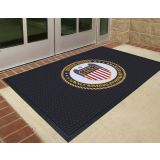 Super Scrape Rubber Logo Mats$185.00Super Scrape Rubber Logo Mats put your logo on a mat that earns its place at the door. The nitrile rubber surface uses raised circular cleats to scrape dirt and water off shoes before they reach your floors, and the artwork is set into the rubber rather than coated
...
Super Scrape Rubber Logo Mats put your logo on a mat that earns its place at the door. The...
Super Scrape Rubber Logo Mats put your logo on a mat that earns its place at the door. The nitrile rubber surface uses raised circular cleats to scrape dirt and water off shoes before they reach your floors, and the artwork is set into the rubber rather than coated on top — so the branding holds up through heavy traffic instead of scuffing away. They're among the most rugged of our outdoor logo mats, built for real commercial use indoors or out.
The logo is digitally printed on a polymeric film, then heat-pressed into the nitrile rubber so it becomes part of the mat. That process reproduces photo-realistic detail — multi-color artwork, tones, and gradients all come through cleanly, which is what separates these printed floor mats from simple one-color welcome mats. You get 150 standard colors to work from, with PMS matching available — up to four PMS colors per design — when a logo has to be exact.
The raised cleats give the mat a high-traction surface that's certified by the National Floor Safety Institute, which matters at a wet entrance where a slip turns into a liability claim. The all-nitrile build also resists oils and chemicals, so the mat holds up at tougher doorways — entries near commercial kitchens, service bays, and manufacturing floors — not just clean lobby entrances. It works indoors or out, though under constant direct sun the printed color softens over time.
The mat comes in standard sizes from 2.5' x 3' up to 6' x 8', so most entrances are covered without custom cutting — what's custom is the artwork, built to your logo and colors. Cleaning is simple: shake or sweep off loose debris and hose it down, or have it commercially laundered. Plan to replace it when the cleats wear smooth or the printed color has faded enough to lose its punch at the door.
Material Nitrile rubber (oil- and chemical-resistant) Logo / image Digitally printed polymeric film, heat-pressed into the rubber Thickness 3/16" (0.1875") Surface Raised circular cleats; high-traction Traction rating NFSI Certified high-traction Colors 150 standard; PMS matching available (up to 4 per design) Standard sizes 2.5'×3', 3'×4', 3'×5', 3'×10', 4'×6', 4'×8', 6'×6', 6'×8' Use Indoor and outdoor Care Hose off, sweep, or commercially launder Warranty 1-year limited (Mats Inc.) Frequently Asked Questions
How well does the logo hold up outdoors and under heavy traffic?
Answered by Dustin Thompson, Owner & CEO
Better than a surface-printed mat. The artwork is printed on a film and heat-pressed into the nitrile rubber, so it's set into the mat instead of sitting on top as a coating that can scuff or peel. Under heavy door traffic, the raised cleats usually wear smooth before the logo gives out. Outdoors, direct sun is the limiting factor — the color softens gradually over the years rather than failing all at once.
Can you match our exact brand colors?
Answered by Jinna Hopson, Vice President of Marketing
Yes. There are 150 standard colors to work from, which covers most logos as they are. When a brand needs precise color, PMS matching is available for up to four colors per design. Because the image is digitally printed before it's pressed into the rubber, photo-realistic detail holds up — multi-color marks, gradients, and fine type come through cleanly instead of being simplified into flat blocks.
What artwork do you need from us, and how detailed can the logo get?
Answered by Jinna Hopson, Vice President of Marketing
Print-ready artwork works best — vector files or high-resolution images reproduce most cleanly. The process handles real detail, including photo-realistic images, multi-color designs, and shaded tones. As a rule of thumb, keep text at least half an inch tall and lines at least a sixteenth of an inch thick so they hold up in production. Send us the logo and the size you need, and we'll confirm how it reproduces before anything is made.
Can these go near kitchens or areas with oil and chemicals?
Answered by Dustin Thompson, Owner & CEO
Yes — that's one of the real advantages of nitrile rubber. Standard rubber softens and breaks down with regular oil and chemical exposure, while nitrile resists both. That lets the mat hold up at doorways near commercial kitchens, auto and service bays, manufacturing floors, and food-service areas, where a standard logo mat would degrade.
By Dustin Thompson, Owner & CEO, Mats Inc.
↑
Super Scrape Rubber Logo Mats put your logo on a mat that earns its place at the door. The nitrile rubber surface uses raised circular cleats to scrape dirt and water off shoes before they reach your floors, and the artwork is set into the rubber rather than coated on top — so the branding holds up through heavy traffic instead of scuffing away. They're among the most rugged of our outdoor logo mats, built for real commercial use indoors or out.
The logo is digitally printed on a polymeric film, then heat-pressed into the nitrile rubber so it becomes part of the mat. That process reproduces photo-realistic detail — multi-color artwork, tones, and gradients all come through cleanly, which is what separates these printed floor mats from simple one-color welcome mats. You get 150 standard colors to work from, with PMS matching available — up to four PMS colors per design — when a logo has to be exact.
The raised cleats give the mat a high-traction surface that's certified by the National Floor Safety Institute, which matters at a wet entrance where a slip turns into a liability claim. The all-nitrile build also resists oils and chemicals, so the mat holds up at tougher doorways — entries near commercial kitchens, service bays, and manufacturing floors — not just clean lobby entrances. It works indoors or out, though under constant direct sun the printed color softens over time.
The mat comes in standard sizes from 2.5' x 3' up to 6' x 8', so most entrances are covered without custom cutting — what's custom is the artwork, built to your logo and colors. Cleaning is simple: shake or sweep off loose debris and hose it down, or have it commercially laundered. Plan to replace it when the cleats wear smooth or the printed color has faded enough to lose its punch at the door.
Material Nitrile rubber (oil- and chemical-resistant) Logo / image Digitally printed polymeric film, heat-pressed into the rubber Thickness 3/16" (0.1875") Surface Raised circular cleats; high-traction Traction rating NFSI Certified high-traction Colors 150 standard; PMS matching available (up to 4 per design) Standard sizes 2.5'×3', 3'×4', 3'×5', 3'×10', 4'×6', 4'×8', 6'×6', 6'×8' Use Indoor and outdoor Care Hose off, sweep, or commercially launder Warranty 1-year limited (Mats Inc.) Frequently Asked Questions
How well does the logo hold up outdoors and under heavy traffic?
Answered by Dustin Thompson, Owner & CEO
Better than a surface-printed mat. The artwork is printed on a film and heat-pressed into the nitrile rubber, so it's set into the mat instead of sitting on top as a coating that can scuff or peel. Under heavy door traffic, the raised cleats usually wear smooth before the logo gives out. Outdoors, direct sun is the limiting factor — the color softens gradually over the years rather than failing all at once.
Can you match our exact brand colors?
Answered by Jinna Hopson, Vice President of Marketing
Yes. There are 150 standard colors to work from, which covers most logos as they are. When a brand needs precise color, PMS matching is available for up to four colors per design. Because the image is digitally printed before it's pressed into the rubber, photo-realistic detail holds up — multi-color marks, gradients, and fine type come through cleanly instead of being simplified into flat blocks.
What artwork do you need from us, and how detailed can the logo get?
Answered by Jinna Hopson, Vice President of Marketing
Print-ready artwork works best — vector files or high-resolution images reproduce most cleanly. The process handles real detail, including photo-realistic images, multi-color designs, and shaded tones. As a rule of thumb, keep text at least half an inch tall and lines at least a sixteenth of an inch thick so they hold up in production. Send us the logo and the size you need, and we'll confirm how it reproduces before anything is made.
Can these go near kitchens or areas with oil and chemicals?
Answered by Dustin Thompson, Owner & CEO
Yes — that's one of the real advantages of nitrile rubber. Standard rubber softens and breaks down with regular oil and chemical exposure, while nitrile resists both. That lets the mat hold up at doorways near commercial kitchens, auto and service bays, manufacturing floors, and food-service areas, where a standard logo mat would degrade.
By Dustin Thompson, Owner & CEO, Mats Inc.
↑
View Details
View Details
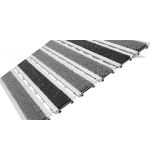 Perfec Clean 3/8" Rollup Mats - Aluminum HingeThe Perfec Clean 3/8" Rollup Mats — Aluminum Hinge is a recessed walk-off mat engineered for the busiest commercial entrances. The aluminum tread-rail surface scrapes dirt off incoming shoes and channels water and snow down into the well below, so the threshold stays presentable while the debris stays out
...
The Perfec Clean 3/8" Rollup Mats — Aluminum Hinge is a recessed walk-off mat engineered for the busiest commercial...
The Perfec Clean 3/8" Rollup Mats — Aluminum Hinge is a recessed walk-off mat engineered for the busiest commercial entrances. The aluminum tread-rail surface scrapes dirt off incoming shoes and channels water and snow down into the well below, so the threshold stays presentable while the debris stays out of sight. What sets it apart is the structured aluminum hinge — it rolls up cleanly for cleaning and lays back flat without requiring any particular technique from the maintenance team.
The construction is built for volume. Tread rails are 6063-T52 aluminum, spaced 2 inches on center and connected by a size-retentive aluminum hinge with slotted holes for maximum drainage. The system carries a 400-pound-per-wheel rolling load rating, so luggage carts, hand trucks, and wheeled equipment cross it without deflecting the rails. It's made in America and meets Buy American Act requirements — which matters when the specification runs through government or institutional procurement.
It installs two ways. Recessed, it seats into a well between 3/8 and 7/16 inch deep and finishes flush with the surrounding floor — the clean, continuous look a recessed mat in a tiled floor is specified for. Surface-mounted, it needs a beveled perimeter frame so the raised edge doesn't become a tripping hazard at the threshold. Send the measured well depth, or tell us you're mounting on the surface, and we'll spec the right frame to match.
This is the workhorse end of the recessed grate systems range — the right call for high-traffic commercial floor grates at corporate lobbies, hospitality entries, transportation hubs, and institutional front doors. Aluminum finish, tread insert type, and insert colors are all configurable, so the entrance reads as an intentional design element rather than a utility mat. The aluminum structure runs for decades; the tread inserts are the wear component and get replaced when they show it, without pulling the whole system.
Frequently Asked Questions
Can this be recessed or surface-mounted, and what depth does the well need?
Answered by Dustin Thompson, Owner & CEO
Both. For a recessed installation, the well should be 3/8 to 7/16 inch deep — the mat seats into it and finishes flush with the surrounding floor. For a surface-mounted installation, you add a beveled perimeter frame so the raised edge doesn't create a tripping hazard at the threshold. If the well is already built, send the measured depth and we'll confirm the fit; if it's still in the design stage, plan it to the 3/8-to-7/16-inch range.
How much traffic and rolling load can it handle?
Answered by Dustin Thompson, Owner & CEO
It's rated for 400 pounds per wheel, which covers luggage carts, hand trucks, wheelchairs, and most wheeled service equipment without the rails deflecting or the hinge loosening. The 6063-T52 aluminum tread rails are built to take continuous foot and wheeled traffic at the heaviest commercial entrances. The aluminum structure itself lasts for decades; what wears is the tread insert, which is designed to be replaced on its own without removing the rail system.
What finish and insert options are available?
Answered by Jinna Hopson, Vice President of Marketing
You can specify the aluminum finish, the tread insert type, and the insert colors — that's where the entrance gets its character. Neutral inserts in matching tones read quiet and refined; higher-contrast or color-blocked inserts make the threshold a deliberate design feature; scraping-style inserts lean functional for heavy-debris entries. Send your color palette or brand standards and we'll lay out the insert combinations that fit the space.
Does an aluminum grate look industrial, or can it suit a high-end entrance?
Answered by Jinna Hopson, Vice President of Marketing
It can read very refined. The visible aluminum rails between textile insert bands give the threshold an architectural, intentional look that fits corporate lobbies, hospitality grand entries, and museum or institutional thresholds where the entrance is part of the design. The insert choice drives the final impression more than the metal does — quiet tones for restraint, contrast for a modern statement. It only reads industrial if you spec it that way.
By Dustin Thompson, Owner & CEO, Mats Inc.
↑
The Perfec Clean 3/8" Rollup Mats — Aluminum Hinge is a recessed walk-off mat engineered for the busiest commercial entrances. The aluminum tread-rail surface scrapes dirt off incoming shoes and channels water and snow down into the well below, so the threshold stays presentable while the debris stays out of sight. What sets it apart is the structured aluminum hinge — it rolls up cleanly for cleaning and lays back flat without requiring any particular technique from the maintenance team.
The construction is built for volume. Tread rails are 6063-T52 aluminum, spaced 2 inches on center and connected by a size-retentive aluminum hinge with slotted holes for maximum drainage. The system carries a 400-pound-per-wheel rolling load rating, so luggage carts, hand trucks, and wheeled equipment cross it without deflecting the rails. It's made in America and meets Buy American Act requirements — which matters when the specification runs through government or institutional procurement.
It installs two ways. Recessed, it seats into a well between 3/8 and 7/16 inch deep and finishes flush with the surrounding floor — the clean, continuous look a recessed mat in a tiled floor is specified for. Surface-mounted, it needs a beveled perimeter frame so the raised edge doesn't become a tripping hazard at the threshold. Send the measured well depth, or tell us you're mounting on the surface, and we'll spec the right frame to match.
This is the workhorse end of the recessed grate systems range — the right call for high-traffic commercial floor grates at corporate lobbies, hospitality entries, transportation hubs, and institutional front doors. Aluminum finish, tread insert type, and insert colors are all configurable, so the entrance reads as an intentional design element rather than a utility mat. The aluminum structure runs for decades; the tread inserts are the wear component and get replaced when they show it, without pulling the whole system.
Frequently Asked Questions
Can this be recessed or surface-mounted, and what depth does the well need?
Answered by Dustin Thompson, Owner & CEO
Both. For a recessed installation, the well should be 3/8 to 7/16 inch deep — the mat seats into it and finishes flush with the surrounding floor. For a surface-mounted installation, you add a beveled perimeter frame so the raised edge doesn't create a tripping hazard at the threshold. If the well is already built, send the measured depth and we'll confirm the fit; if it's still in the design stage, plan it to the 3/8-to-7/16-inch range.
How much traffic and rolling load can it handle?
Answered by Dustin Thompson, Owner & CEO
It's rated for 400 pounds per wheel, which covers luggage carts, hand trucks, wheelchairs, and most wheeled service equipment without the rails deflecting or the hinge loosening. The 6063-T52 aluminum tread rails are built to take continuous foot and wheeled traffic at the heaviest commercial entrances. The aluminum structure itself lasts for decades; what wears is the tread insert, which is designed to be replaced on its own without removing the rail system.
What finish and insert options are available?
Answered by Jinna Hopson, Vice President of Marketing
You can specify the aluminum finish, the tread insert type, and the insert colors — that's where the entrance gets its character. Neutral inserts in matching tones read quiet and refined; higher-contrast or color-blocked inserts make the threshold a deliberate design feature; scraping-style inserts lean functional for heavy-debris entries. Send your color palette or brand standards and we'll lay out the insert combinations that fit the space.
Does an aluminum grate look industrial, or can it suit a high-end entrance?
Answered by Jinna Hopson, Vice President of Marketing
It can read very refined. The visible aluminum rails between textile insert bands give the threshold an architectural, intentional look that fits corporate lobbies, hospitality grand entries, and museum or institutional thresholds where the entrance is part of the design. The insert choice drives the final impression more than the metal does — quiet tones for restraint, contrast for a modern statement. It only reads industrial if you spec it that way.
By Dustin Thompson, Owner & CEO, Mats Inc.
↑
View Details
View Details
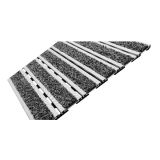 Perfec Clean 3/8" Rollup Mats - Rubber HingeA recessed rubber-hinged mat sits flush in a well at your entrance and does two jobs at once: it scrapes grit and water off shoes into the recess below, and its soft vinyl hinges cushion each step so foot traffic lands quietly. It's the lighter, quieter version of a recessed
...
A recessed rubber-hinged mat sits flush in a well at your entrance and does two jobs at once: it scrapes...
A recessed rubber-hinged mat sits flush in a well at your entrance and does two jobs at once: it scrapes grit and water off shoes into the recess below, and its soft vinyl hinges cushion each step so foot traffic lands quietly. It's the lighter, quieter version of a recessed entrance grate, made for entries that see steady but not punishing traffic.
What a recessed rubber-hinged mat does before grit reaches your floor
A recessed walk-off mat seats in a well cut into the floor at the door, so people cross it as they come in. The tread scrapes dirt and pulls moisture off shoes, and the open construction lets both fall into the recess below instead of spreading across your floor. What sets this one apart is the soft hinge between the rails, which takes the hard click out of footsteps.
Getting that capture right at the door matters. ISSA field data shows it takes about six to eight footsteps to remove most of the soil on a shoe, so a mat long enough to cover those steps keeps grit and water in the well rather than on your finished floor. Size it too short and the dirt simply walks past it.
Why soft vinyl hinges, and why this one
The mat is built from aluminum tread rails, but instead of linking them with metal hinges, this version joins them with flexible vinyl. That soft hinge flexes underfoot and absorbs the noise of foot traffic, so the mat is quieter to walk across than an all-metal grate. It's also lightweight, which makes it easy to roll back for cleaning the recess underneath.
The trade-off is traffic. The vinyl-hinged build is made for light-to-medium pedestrian entrances, not the busiest doors in a building. In return you get a mat that's quieter underfoot and gentler in spaces where a clattering metal grate would feel out of place.
The 3/8" profile keeps the mat low, so it suits a shallow recess. You still choose the tread that rides on the rails — bare serrated aluminum, a nylon carpet insert, Diamond Peak vinyl, or a polypropylene brush — depending on how much scraping the entrance needs and how you want it to look.
Where it belongs, and what it is not
This mat fits entrances that stay busy but civilized — office lobbies, hotels, clinics and healthcare waiting areas, boutiques, and other spaces where quiet matters and the traffic is light to medium. It's part of our lineup of recessed grate systems, set flush so there's no lip at the door.
It is not the mat for your busiest, grittiest doors — that's where an all-metal hinged grate earns its place. And it is not a soft drying mat or a logo mat. It handles the first scrape-and-drain step at a quieter entrance; pair it with an absorbent mat a few steps inside to finish drying shoes.
Three things to check before you spec it
First, match it to your traffic. This is a light-to-medium-duty mat, so the most common mistake is putting it in the hardest-working door in the building. In a high-traffic entrance it will wear faster than it should; in the office, hotel, or clinic doorway it's built for, it holds up and keeps things quiet.
Second, check the recess depth and frame. Seated flush in a properly cut well, the mat sits level with the floor and there's no trip lip. If you can't cut a recess, a surface-applied frame with a ramped edge sets the mat on top of the existing floor instead.
Third, pick the insert for the entrance. Brush knocks off coarser grit, carpet holds fine moisture and reads softer underfoot, vinyl gives a wipeable surface, and bare aluminum scrapes hardest. The same frame takes any of them, so you're matching the tread to the door, not changing the mat.
Why Mats Inc.
We've specified entrance flooring since 1964, and the rubber-hinged mat is a good example of why the spec matters — pick it for the right door and it's quiet, easy to maintain, and long-lived; drop it into a high-traffic entrance and it's the wrong tool. We help you match the mat, the recess depth, and the insert to your actual entrance, then ship it made to your opening. Mats Inc. specifies the system; your installer sets it into the prepared recess.
Specifications Profile thickness 3/8" Construction Aluminum tread rails joined by flexible vinyl (rubber) hinges; lightweight; rolls up for cleaning underneath Hinges Soft vinyl — flex underfoot and absorb foot-traffic noise Traffic rating Light to medium pedestrian Tread / insert options Bare serrated aluminum (no insert), nylon carpet, Diamond Peak vinyl, or polypropylene brush — one frame accepts any Color options Multiple per insert plus anodized aluminum finishes; sample card available for matching Installation Recessed (set flush in a floor well) or surface-applied with a ramped frame Drainage Open construction; dirt, grime, and moisture drop below the tread into the recess Spec section CSI 12 48 13 / 12 48 16 (Entrance Floor Mats & Grilles) Origin Made in the USA; Buy American Act compliant Warranty 1-year limited (Mats Inc.) Frequently Asked Questions
What makes a rubber-hinged mat different from an all-metal one?
Answered by Dustin Thompson, Owner & CEO
Both use aluminum tread rails, but this one links those rails with soft vinyl hinges instead of metal ones. The vinyl flexes as you step, which absorbs the noise of foot traffic and gives a little underfoot, so the mat is quieter and softer than an all-aluminum grate. It's also lighter, so it's easy to roll up when you want to clean the recess underneath.
The metal-hinged version trades that quiet for the ability to take heavier traffic. Which one is right comes down to how busy the door is.
How long will it last, and what wears it out?
Answered by Dustin Thompson, Owner & CEO
The biggest factor is whether it's matched to its traffic. This is a light-to-medium-duty mat, so used in the entrance it's built for, the aluminum rails don't rust and it holds up for years. Put it in a high-traffic door and the hinges and tread wear faster than they should.
After that, maintenance decides the rest — rolling the mat up to clear grit out of the recess keeps it working and looking right far longer.
Can it be installed without cutting a recess into the floor?
Answered by Dustin Thompson, Owner & CEO
Yes. The cleanest install seats the mat flush in a recessed well, so it's level with the floor and there's no lip to catch a toe. When recessing isn't an option — a slab you don't want to cut, or a fast retrofit — a surface-applied frame with a ramped edge mounts the mat on top of the floor instead. Recessed is the better look where you can do it; surface-applied gets you the same mat where you can't.
What insert and color options does it come with?
Answered by Jinna Hopson, Vice President of Marketing
The tread comes in four styles — bare serrated aluminum, nylon carpet, Diamond Peak vinyl, and polypropylene brush — and most offer a range of colors, from charcoal and black through warmer browns, with anodized finishes on the aluminum.
Because color looks different on a screen than in person, we send a sample card before you order, which helps when you're matching the mat to a floor or a brand palette.
Can it be made to fit an odd-shaped or oversized entry?
Answered by Jinna Hopson, Vice President of Marketing
Yes — the mat is made to your opening rather than pulled from a few stock sizes, so a wide vestibule or an entry that isn't a tidy rectangle can still get a mat that runs the full walking path. Send the recess dimensions, or the opening if you're surface-mounting, and we build the mat and frame to suit. Settling the fit at the order stage is what keeps it sitting flush and covering every step into the door.
Is it quiet enough for an office or hotel lobby, and how do I know it's the right pick?
Answered by Jinna Hopson, Vice President of Marketing
That's exactly the entrance it's made for. The soft vinyl hinges take the sharp click out of footsteps, so it suits places where a noisy metal grate would feel jarring — quiet lobbies, hotels, healthcare waiting areas, upscale retail.
The thing to confirm is traffic volume. If the door is light to medium, this mat is the right call; if it's one of the busiest in the building, step up to the heavier all-metal grate instead.
By Jinna Hopson, Vice President of Marketing, Mats Inc.
↑
A recessed rubber-hinged mat sits flush in a well at your entrance and does two jobs at once: it scrapes grit and water off shoes into the recess below, and its soft vinyl hinges cushion each step so foot traffic lands quietly. It's the lighter, quieter version of a recessed entrance grate, made for entries that see steady but not punishing traffic.
What a recessed rubber-hinged mat does before grit reaches your floor
A recessed walk-off mat seats in a well cut into the floor at the door, so people cross it as they come in. The tread scrapes dirt and pulls moisture off shoes, and the open construction lets both fall into the recess below instead of spreading across your floor. What sets this one apart is the soft hinge between the rails, which takes the hard click out of footsteps.
Getting that capture right at the door matters. ISSA field data shows it takes about six to eight footsteps to remove most of the soil on a shoe, so a mat long enough to cover those steps keeps grit and water in the well rather than on your finished floor. Size it too short and the dirt simply walks past it.
Why soft vinyl hinges, and why this one
The mat is built from aluminum tread rails, but instead of linking them with metal hinges, this version joins them with flexible vinyl. That soft hinge flexes underfoot and absorbs the noise of foot traffic, so the mat is quieter to walk across than an all-metal grate. It's also lightweight, which makes it easy to roll back for cleaning the recess underneath.
The trade-off is traffic. The vinyl-hinged build is made for light-to-medium pedestrian entrances, not the busiest doors in a building. In return you get a mat that's quieter underfoot and gentler in spaces where a clattering metal grate would feel out of place.
The 3/8" profile keeps the mat low, so it suits a shallow recess. You still choose the tread that rides on the rails — bare serrated aluminum, a nylon carpet insert, Diamond Peak vinyl, or a polypropylene brush — depending on how much scraping the entrance needs and how you want it to look.
Where it belongs, and what it is not
This mat fits entrances that stay busy but civilized — office lobbies, hotels, clinics and healthcare waiting areas, boutiques, and other spaces where quiet matters and the traffic is light to medium. It's part of our lineup of recessed grate systems, set flush so there's no lip at the door.
It is not the mat for your busiest, grittiest doors — that's where an all-metal hinged grate earns its place. And it is not a soft drying mat or a logo mat. It handles the first scrape-and-drain step at a quieter entrance; pair it with an absorbent mat a few steps inside to finish drying shoes.
Three things to check before you spec it
First, match it to your traffic. This is a light-to-medium-duty mat, so the most common mistake is putting it in the hardest-working door in the building. In a high-traffic entrance it will wear faster than it should; in the office, hotel, or clinic doorway it's built for, it holds up and keeps things quiet.
Second, check the recess depth and frame. Seated flush in a properly cut well, the mat sits level with the floor and there's no trip lip. If you can't cut a recess, a surface-applied frame with a ramped edge sets the mat on top of the existing floor instead.
Third, pick the insert for the entrance. Brush knocks off coarser grit, carpet holds fine moisture and reads softer underfoot, vinyl gives a wipeable surface, and bare aluminum scrapes hardest. The same frame takes any of them, so you're matching the tread to the door, not changing the mat.
Why Mats Inc.
We've specified entrance flooring since 1964, and the rubber-hinged mat is a good example of why the spec matters — pick it for the right door and it's quiet, easy to maintain, and long-lived; drop it into a high-traffic entrance and it's the wrong tool. We help you match the mat, the recess depth, and the insert to your actual entrance, then ship it made to your opening. Mats Inc. specifies the system; your installer sets it into the prepared recess.
Specifications Profile thickness 3/8" Construction Aluminum tread rails joined by flexible vinyl (rubber) hinges; lightweight; rolls up for cleaning underneath Hinges Soft vinyl — flex underfoot and absorb foot-traffic noise Traffic rating Light to medium pedestrian Tread / insert options Bare serrated aluminum (no insert), nylon carpet, Diamond Peak vinyl, or polypropylene brush — one frame accepts any Color options Multiple per insert plus anodized aluminum finishes; sample card available for matching Installation Recessed (set flush in a floor well) or surface-applied with a ramped frame Drainage Open construction; dirt, grime, and moisture drop below the tread into the recess Spec section CSI 12 48 13 / 12 48 16 (Entrance Floor Mats & Grilles) Origin Made in the USA; Buy American Act compliant Warranty 1-year limited (Mats Inc.) Frequently Asked Questions
What makes a rubber-hinged mat different from an all-metal one?
Answered by Dustin Thompson, Owner & CEO
Both use aluminum tread rails, but this one links those rails with soft vinyl hinges instead of metal ones. The vinyl flexes as you step, which absorbs the noise of foot traffic and gives a little underfoot, so the mat is quieter and softer than an all-aluminum grate. It's also lighter, so it's easy to roll up when you want to clean the recess underneath.
The metal-hinged version trades that quiet for the ability to take heavier traffic. Which one is right comes down to how busy the door is.
How long will it last, and what wears it out?
Answered by Dustin Thompson, Owner & CEO
The biggest factor is whether it's matched to its traffic. This is a light-to-medium-duty mat, so used in the entrance it's built for, the aluminum rails don't rust and it holds up for years. Put it in a high-traffic door and the hinges and tread wear faster than they should.
After that, maintenance decides the rest — rolling the mat up to clear grit out of the recess keeps it working and looking right far longer.
Can it be installed without cutting a recess into the floor?
Answered by Dustin Thompson, Owner & CEO
Yes. The cleanest install seats the mat flush in a recessed well, so it's level with the floor and there's no lip to catch a toe. When recessing isn't an option — a slab you don't want to cut, or a fast retrofit — a surface-applied frame with a ramped edge mounts the mat on top of the floor instead. Recessed is the better look where you can do it; surface-applied gets you the same mat where you can't.
What insert and color options does it come with?
Answered by Jinna Hopson, Vice President of Marketing
The tread comes in four styles — bare serrated aluminum, nylon carpet, Diamond Peak vinyl, and polypropylene brush — and most offer a range of colors, from charcoal and black through warmer browns, with anodized finishes on the aluminum.
Because color looks different on a screen than in person, we send a sample card before you order, which helps when you're matching the mat to a floor or a brand palette.
Can it be made to fit an odd-shaped or oversized entry?
Answered by Jinna Hopson, Vice President of Marketing
Yes — the mat is made to your opening rather than pulled from a few stock sizes, so a wide vestibule or an entry that isn't a tidy rectangle can still get a mat that runs the full walking path. Send the recess dimensions, or the opening if you're surface-mounting, and we build the mat and frame to suit. Settling the fit at the order stage is what keeps it sitting flush and covering every step into the door.
Is it quiet enough for an office or hotel lobby, and how do I know it's the right pick?
Answered by Jinna Hopson, Vice President of Marketing
That's exactly the entrance it's made for. The soft vinyl hinges take the sharp click out of footsteps, so it suits places where a noisy metal grate would feel jarring — quiet lobbies, hotels, healthcare waiting areas, upscale retail.
The thing to confirm is traffic volume. If the door is light to medium, this mat is the right call; if it's one of the busiest in the building, step up to the heavier all-metal grate instead.
By Jinna Hopson, Vice President of Marketing, Mats Inc.
↑
View Details
View Details
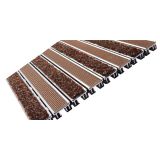 Perfec Clean 3/4" Rollup Grate - Rubber HingeA recessed roll-up grate is the heavy-duty option for a busy entrance: a deep, open grate that scrapes grit and drains water into a pit below, holds up under rolling loads like carts and luggage trolleys, and still stays quiet underfoot thanks to rubber hinges between the rails. It rolls
...
A recessed roll-up grate is the heavy-duty option for a busy entrance: a deep, open grate that scrapes grit and...
A recessed roll-up grate is the heavy-duty option for a busy entrance: a deep, open grate that scrapes grit and drains water into a pit below, holds up under rolling loads like carts and luggage trolleys, and still stays quiet underfoot thanks to rubber hinges between the rails. It rolls up in one piece so the pit underneath is easy to clean out.
What a recessed roll-up grate does before dirt and wheels reach your floor
A recessed walk-off grate sits flush in a pit cut into the floor at the entrance, so everyone crosses it on the way in. The open rails scrape grit and let water drop into the pit below, keeping both off your finished floor. Because this grate is built deep, the pit holds a lot more debris before it needs clearing.
That capacity matters most when the weather turns. ISSA field data shows about twelve times more dirt comes into a building during wet weather, so a deeper pit that holds more grit and melt between cleanings keeps a heavy entrance working instead of overflowing onto the floor.
Why a 3/4" rubber-hinged grate, and why this one
This grate is built thicker and deeper than a standard recessed mat — a 3/4" profile that gives it the strength to take rolling loads. The rubber hinges between the aluminum rails do two things at once: they soften the noise of foot traffic, and they hold the grate together under wheels rated to 1,000 pounds per wheel.
That combination is the point. Usually you pick between a quiet mat and one that can take a beating; here the rubber hinge gives you both, which is why it suits entrances with carts, luggage trolleys, or wheelchairs rolling across all day.
You also choose the tread, and you can mix them. Run grit-scraping treads like brush or bare aluminum where shoes hit first, then moisture-holding carpet behind them, so one grate both knocks off debris and soaks up the water it loosens.
Where it belongs, and what it is not
This is the grate for the hardest-working doors — busy retail and grocery entrances, hotel and convention lobbies, hospital and transit entrances, anywhere foot traffic mixes with wheeled traffic and weather. It belongs to our range of recessed grate systems, dropped into a pit so the surface finishes flush with the floor around it.
It is not a light-duty or surface-laid mat — it needs a recessed pit, and it's more grate than you need for a quiet, low-traffic side door. And it's not the soft mat that finishes drying shoes; it does the heavy scrape-and-drain at the threshold. Pair it with an interior absorbent mat a few steps in.
Three things to check before you spec it
First, confirm the pit depth. This grate is deeper than a standard recessed mat, so the pit has to be cut to suit it. On a new pour that's easy to plan; on an existing slab, check that you can cut a pit deep enough before you commit to this grate over a thinner one.
Second, size it to the rolling loads. The grate holds its shape under wheels up to 1,000 pounds each, which covers most carts, luggage trolleys, and mobility equipment. If your entrance sees heavier rolling loads than that, tell us, and we'll confirm it's the right grate before you order.
Third, plan the tread mix. Because you can alternate treads, decide where the scraping happens and where the moisture gets held. A common setup runs aggressive brush or bare aluminum at the leading edge and carpet behind it, so the grate both cleans and dries across its length.
Why Mats Inc.
We've specified entrance flooring since 1964, and a heavy-duty roll-up grate is one of the products where getting the spec right up front saves the most grief — the pit depth, the frame, the rolling-load rating, and the tread mix all have to suit the door before anything is cut into the floor. We help you settle those, then ship the grate made to your opening. Mats Inc. specifies the system; your installer sets it into the prepared pit.
Specifications Profile thickness 3/4" Construction Aluminum rails joined by rubber hinges; deep open grate; rolls up for cleaning the pit underneath Hinges Rubber — soften foot-traffic noise and hold integrity under rolling loads Traffic rating Heavy pedestrian and wheeled traffic Rolling load 1,000 lbs per wheel Pit Deeper pit holds more debris between cleanings Tread / insert options Bare serrated aluminum (no insert), nylon carpet, Diamond Peak vinyl, or polypropylene brush — can be alternated within one grate Color options Multiple per insert plus anodized aluminum finishes; sample card available for matching Installation Recessed (pit-embed); requires a deeper pit Drainage Open construction; grit and water drop into the pit below Spec section CSI 12 48 13 / 12 48 16 (Entrance Floor Mats & Grilles) Sustainability LEED documentation available on request Origin Made in the USA; Buy American Act compliant Warranty 1-year limited (Mats Inc.) Frequently Asked Questions
How does a roll-up grate handle heavy rolling loads and still stay quiet?
Answered by Dustin Thompson, Owner & CEO
The grate is made of aluminum rails linked by rubber hinges. The rubber does double duty — it flexes to absorb the noise of footsteps, and it holds the rails together under wheels, so the grate keeps its shape under rolling loads up to 1,000 pounds per wheel.
When it's time to clean, the whole grate rolls up so you can clear the pit underneath, then lays back down.
How much weight can it take, and what wears it out?
Answered by Dustin Thompson, Owner & CEO
It's rated to hold its integrity under rolling loads of 1,000 pounds per wheel, which covers most carts, luggage trolleys, and mobility equipment that cross a commercial entrance. The aluminum rails don't rust, so weather isn't the enemy — letting grit build up in the pit is.
Roll the grate up on a regular schedule, clear the pit, and a heavy-duty grate like this stays in service for the long haul.
Can it be surface-mounted, or does it need a pit?
Answered by Dustin Thompson, Owner & CEO
This one needs a recessed pit. It's a deep, heavy-duty grate, so it's designed to drop into a pit cut into the floor rather than sit on top with a ramp. That deeper pit is part of what makes it work — it holds more debris between cleanings. If you can't cut a pit deep enough, a thinner recessed mat is the better route, and we can point you to one.
What insert and color options does it come with?
Answered by Jinna Hopson, Vice President of Marketing
The tread comes in four types — bare serrated aluminum, nylon carpet, Diamond Peak vinyl, and polypropylene brush — each with a range of colors, plus anodized finishes on the aluminum. What's a little different with this grate is that you can combine treads in one unit, so the look can shift across its length.
We send a sample card before you order so the colors you pick match the floor or your brand.
Can it be built to fit a wide or unusual entrance?
Answered by Jinna Hopson, Vice President of Marketing
Yes — the grate is made to your opening rather than sold in a few fixed sizes, so a wide vestibule or a long entry corridor can get a grate that runs the full path. Send us the pit dimensions and we'll build the grate and frame to match. With a heavy-traffic door especially, you want the grate covering the whole width so no one steps around it onto the bare floor.
Is a heavy grate like this too industrial-looking for a nice lobby?
Answered by Jinna Hopson, Vice President of Marketing
It doesn't have to be. The same grate that takes 1,000-pound rolling loads can be finished to suit a polished space — a carpet insert in a tone that picks up the floor softens it, while anodized aluminum reads clean and architectural. Plenty of upscale hotel and retail entrances use a heavy-duty grate precisely because it's quiet underfoot and holds up to constant traffic without looking worn.
By Dustin Thompson, Owner & CEO, Mats Inc.
↑
A recessed roll-up grate is the heavy-duty option for a busy entrance: a deep, open grate that scrapes grit and drains water into a pit below, holds up under rolling loads like carts and luggage trolleys, and still stays quiet underfoot thanks to rubber hinges between the rails. It rolls up in one piece so the pit underneath is easy to clean out.
What a recessed roll-up grate does before dirt and wheels reach your floor
A recessed walk-off grate sits flush in a pit cut into the floor at the entrance, so everyone crosses it on the way in. The open rails scrape grit and let water drop into the pit below, keeping both off your finished floor. Because this grate is built deep, the pit holds a lot more debris before it needs clearing.
That capacity matters most when the weather turns. ISSA field data shows about twelve times more dirt comes into a building during wet weather, so a deeper pit that holds more grit and melt between cleanings keeps a heavy entrance working instead of overflowing onto the floor.
Why a 3/4" rubber-hinged grate, and why this one
This grate is built thicker and deeper than a standard recessed mat — a 3/4" profile that gives it the strength to take rolling loads. The rubber hinges between the aluminum rails do two things at once: they soften the noise of foot traffic, and they hold the grate together under wheels rated to 1,000 pounds per wheel.
That combination is the point. Usually you pick between a quiet mat and one that can take a beating; here the rubber hinge gives you both, which is why it suits entrances with carts, luggage trolleys, or wheelchairs rolling across all day.
You also choose the tread, and you can mix them. Run grit-scraping treads like brush or bare aluminum where shoes hit first, then moisture-holding carpet behind them, so one grate both knocks off debris and soaks up the water it loosens.
Where it belongs, and what it is not
This is the grate for the hardest-working doors — busy retail and grocery entrances, hotel and convention lobbies, hospital and transit entrances, anywhere foot traffic mixes with wheeled traffic and weather. It belongs to our range of recessed grate systems, dropped into a pit so the surface finishes flush with the floor around it.
It is not a light-duty or surface-laid mat — it needs a recessed pit, and it's more grate than you need for a quiet, low-traffic side door. And it's not the soft mat that finishes drying shoes; it does the heavy scrape-and-drain at the threshold. Pair it with an interior absorbent mat a few steps in.
Three things to check before you spec it
First, confirm the pit depth. This grate is deeper than a standard recessed mat, so the pit has to be cut to suit it. On a new pour that's easy to plan; on an existing slab, check that you can cut a pit deep enough before you commit to this grate over a thinner one.
Second, size it to the rolling loads. The grate holds its shape under wheels up to 1,000 pounds each, which covers most carts, luggage trolleys, and mobility equipment. If your entrance sees heavier rolling loads than that, tell us, and we'll confirm it's the right grate before you order.
Third, plan the tread mix. Because you can alternate treads, decide where the scraping happens and where the moisture gets held. A common setup runs aggressive brush or bare aluminum at the leading edge and carpet behind it, so the grate both cleans and dries across its length.
Why Mats Inc.
We've specified entrance flooring since 1964, and a heavy-duty roll-up grate is one of the products where getting the spec right up front saves the most grief — the pit depth, the frame, the rolling-load rating, and the tread mix all have to suit the door before anything is cut into the floor. We help you settle those, then ship the grate made to your opening. Mats Inc. specifies the system; your installer sets it into the prepared pit.
Specifications Profile thickness 3/4" Construction Aluminum rails joined by rubber hinges; deep open grate; rolls up for cleaning the pit underneath Hinges Rubber — soften foot-traffic noise and hold integrity under rolling loads Traffic rating Heavy pedestrian and wheeled traffic Rolling load 1,000 lbs per wheel Pit Deeper pit holds more debris between cleanings Tread / insert options Bare serrated aluminum (no insert), nylon carpet, Diamond Peak vinyl, or polypropylene brush — can be alternated within one grate Color options Multiple per insert plus anodized aluminum finishes; sample card available for matching Installation Recessed (pit-embed); requires a deeper pit Drainage Open construction; grit and water drop into the pit below Spec section CSI 12 48 13 / 12 48 16 (Entrance Floor Mats & Grilles) Sustainability LEED documentation available on request Origin Made in the USA; Buy American Act compliant Warranty 1-year limited (Mats Inc.) Frequently Asked Questions
How does a roll-up grate handle heavy rolling loads and still stay quiet?
Answered by Dustin Thompson, Owner & CEO
The grate is made of aluminum rails linked by rubber hinges. The rubber does double duty — it flexes to absorb the noise of footsteps, and it holds the rails together under wheels, so the grate keeps its shape under rolling loads up to 1,000 pounds per wheel.
When it's time to clean, the whole grate rolls up so you can clear the pit underneath, then lays back down.
How much weight can it take, and what wears it out?
Answered by Dustin Thompson, Owner & CEO
It's rated to hold its integrity under rolling loads of 1,000 pounds per wheel, which covers most carts, luggage trolleys, and mobility equipment that cross a commercial entrance. The aluminum rails don't rust, so weather isn't the enemy — letting grit build up in the pit is.
Roll the grate up on a regular schedule, clear the pit, and a heavy-duty grate like this stays in service for the long haul.
Can it be surface-mounted, or does it need a pit?
Answered by Dustin Thompson, Owner & CEO
This one needs a recessed pit. It's a deep, heavy-duty grate, so it's designed to drop into a pit cut into the floor rather than sit on top with a ramp. That deeper pit is part of what makes it work — it holds more debris between cleanings. If you can't cut a pit deep enough, a thinner recessed mat is the better route, and we can point you to one.
What insert and color options does it come with?
Answered by Jinna Hopson, Vice President of Marketing
The tread comes in four types — bare serrated aluminum, nylon carpet, Diamond Peak vinyl, and polypropylene brush — each with a range of colors, plus anodized finishes on the aluminum. What's a little different with this grate is that you can combine treads in one unit, so the look can shift across its length.
We send a sample card before you order so the colors you pick match the floor or your brand.
Can it be built to fit a wide or unusual entrance?
Answered by Jinna Hopson, Vice President of Marketing
Yes — the grate is made to your opening rather than sold in a few fixed sizes, so a wide vestibule or a long entry corridor can get a grate that runs the full path. Send us the pit dimensions and we'll build the grate and frame to match. With a heavy-traffic door especially, you want the grate covering the whole width so no one steps around it onto the bare floor.
Is a heavy grate like this too industrial-looking for a nice lobby?
Answered by Jinna Hopson, Vice President of Marketing
It doesn't have to be. The same grate that takes 1,000-pound rolling loads can be finished to suit a polished space — a carpet insert in a tone that picks up the floor softens it, while anodized aluminum reads clean and architectural. Plenty of upscale hotel and retail entrances use a heavy-duty grate precisely because it's quiet underfoot and holds up to constant traffic without looking worn.
By Dustin Thompson, Owner & CEO, Mats Inc.
↑
View Details
View Details
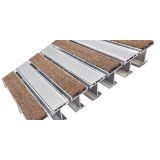 Perfec Clean 1-5/8" GrateThe 1-5/8" rigid grate is the heaviest-built recessed entrance grate we carry — aluminum sections locked and welded into one solid surface, set into a deep pit that scrapes grit and drains water well below the floor. It's the grate you spec for the busiest entrances, where you want maximum
...
The 1-5/8" rigid grate is the heaviest-built recessed entrance grate we carry — aluminum sections locked and welded into one...
The 1-5/8" rigid grate is the heaviest-built recessed entrance grate we carry — aluminum sections locked and welded into one solid surface, set into a deep pit that scrapes grit and drains water well below the floor. It's the grate you spec for the busiest entrances, where you want maximum strength underfoot and a pit deep enough to hold a season's worth of dirt between cleanings.
What a rigid recessed grate does before grit and water reach your floor
A recessed walk-off grate sits flush in a pit at the entrance, so everyone crosses it coming in. The open surface scrapes dirt off shoes and lets rain, snowmelt, and grit fall into the pit below instead of tracking across your floor. This grate is built deep, so that pit holds a large amount of debris before anyone needs to clear it.
At a busy door, that keeps more than the floor clean. A flush grate that drains water away leaves less standing moisture at the threshold, which is where slips happen. NFSI ties a meaningful share of slip-and-fall claims to building entrances, so pulling water off shoes and into the pit is a safety measure as much as a cleaning one.
Why a rigid welded grate, and why this one
Where the roll-up versions flex, this grate is rigid. The aluminum sections are locked and welded together into a solid structure built for maximum strength, which is what suits it to the heaviest, most constant traffic. There's no hinge to flex underfoot — it's a firm, stable surface.
It still comes apart when you need it to. Each section undocks on its own, so a crew can lift out a panel to clear the pit underneath or to handle the grate during maintenance, then lock it back in. You get the strength of a welded grate without it being a single immovable slab.
At 1-5/8", it's the deepest profile in the line, and the depth is the feature. A deep pit gives rain, snow, dirt, and debris room to collect at a high-traffic entrance, so the grate keeps working longer between cleanings instead of filling up and pushing grit back onto the floor.
As with the rest of the line, you choose the tread — bare serrated aluminum, nylon carpet, Diamond Peak vinyl, or a polypropylene brush — to match how much scraping the entrance needs and the look you want.
Where it belongs, and what it is not
This is the grate for the highest-traffic, most permanent entrances — major retail and grocery doors, transit hubs, convention and hospital entrances, anywhere a steady crowd and the weather come through all day. It's one of our recessed grate systems, set into a deep pit so the surface finishes flush with the floor around it.
It is not a surface-laid or light-duty mat — it needs a deep recessed pit, so it's a poor fit for a slab you can't cut into or a quiet, low-traffic door. And it's not the soft mat that dries shoes; it does the heavy scrape-and-drain at the threshold. Pair it with an absorbent interior mat a few steps inside.
Three things to check before you spec it
First, confirm the pit depth. This is the deepest grate in the line, so it needs a pit cut to suit it. On a new pour that's straightforward to design in; on an existing slab, make sure you can cut a pit deep enough before choosing this grate over a thinner one.
Second, plan how it gets cleaned. A deep pit holds a lot, but it still has to be cleared. The sections undock so a crew can lift them out and clean the pit, so think about access and who handles maintenance on a wide or heavy grate before you finalize the size.
Third, pick the tread for the entrance. Brush knocks off coarse grit, carpet holds fine moisture and reads softer, vinyl gives a wipeable surface, and bare aluminum scrapes hardest. The grate takes any of them, so you match the tread to the door without changing the grate.
Why Mats Inc.
We've specified entrance flooring since 1964, and a rigid recessed grate is a long-term commitment to the floor — once the pit is cut and the grate is set, it's there for years, so the spec has to be right the first time. We help you size the pit, choose the frame and tread, and plan for maintenance before anything gets cut, then ship the grate built to your opening. Mats Inc. specifies the system; your installer sets it into the prepared pit.
Specifications Profile thickness 1-5/8" (deepest profile in the line) Construction Rigid aluminum sections locked and welded together for maximum strength; sections undock individually for cleaning and handling Traffic rating High traffic; heaviest, most permanent entrances Pit Deep pit; large debris capacity between cleanings Tread / insert options Bare serrated aluminum (no insert), nylon carpet, Diamond Peak vinyl, or polypropylene brush Color options Multiple per insert plus anodized aluminum finishes; sample card available for matching Installation Recessed (pit-embed); deep pit required Drainage Open construction; rain, snow, dirt, and debris fall into the pit below Spec section CSI 12 48 13 / 12 48 16 (Entrance Floor Mats & Grilles) Origin Made in the USA; Buy American Act compliant Warranty 1-year limited (Mats Inc.) Frequently Asked Questions
What makes this a rigid grate instead of a roll-up?
Answered by Dustin Thompson, Owner & CEO
The difference is in how the sections are joined. A roll-up grate uses hinges so it can curl up for cleaning; this one locks and welds its aluminum sections together into a solid, rigid surface built for maximum strength, with no flex underfoot.
When you need to get into the pit, the sections undock individually, so a crew can lift them out, clean underneath, and lock them back in place.
How tough is it, and what shortens its life?
Answered by Dustin Thompson, Owner & CEO
The welded aluminum construction is built for maximum strength, which is why it's the grate for the busiest, most permanent entrances. Aluminum doesn't rust, so the structure isn't fighting the weather.
What actually shortens a grate's useful life is neglect — a deep pit that never gets cleared fills with grit, and once it's full it stops capturing dirt and starts pushing it back onto the floor. Keep the pit cleaned out and a rigid grate lasts a very long time.
Does it need a recessed pit, or can it sit on top of the floor?
Answered by Dustin Thompson, Owner & CEO
It needs a recessed pit. This is the deepest grate in the line, designed to drop into a pit cut into the floor rather than sit on top with a ramp — and that depth is the whole point, because it gives dirt and water room to collect at a busy door. If you can't cut a deep enough pit, a thinner recessed mat is the better fit, and we can steer you to one.
What insert and color options does it come with?
Answered by Jinna Hopson, Vice President of Marketing
The tread comes in four types — bare serrated aluminum, nylon carpet, Diamond Peak vinyl, and polypropylene brush — each in a range of colors, with anodized finishes available on the aluminum. So even though it's a heavy structural grate, you have real say over how it looks.
Because screen colors aren't exact, we send a sample card before you order so the tread matches your floor or your brand.
Can it be made to fit a wide or unusually shaped entrance?
Answered by Jinna Hopson, Vice President of Marketing
Yes. The grate is built in sections to your opening rather than sold in a few stock sizes, so a wide vestibule or a long entry run can be covered fully — the sections lock together across the span. Send us the pit dimensions and we'll build the grate and frame to fit. On a busy door you want it spanning the whole width so traffic can't step around it onto the bare floor.
Will it still look good in a high-traffic lobby a few years in?
Answered by Jinna Hopson, Vice President of Marketing
That's where a heavy grate earns its keep. A flush, rigid grate doesn't curl, ripple, or shift the way a lighter mat can once thousands of people have crossed it, so it tends to keep a clean, intentional look over time.
The tread does the visible aging — carpet shows wear sooner than brush or aluminum — so on the most punishing doors, a harder-wearing tread keeps the entrance looking sharp longer.
By Dustin Thompson, Owner & CEO, Mats Inc.
↑
The 1-5/8" rigid grate is the heaviest-built recessed entrance grate we carry — aluminum sections locked and welded into one solid surface, set into a deep pit that scrapes grit and drains water well below the floor. It's the grate you spec for the busiest entrances, where you want maximum strength underfoot and a pit deep enough to hold a season's worth of dirt between cleanings.
What a rigid recessed grate does before grit and water reach your floor
A recessed walk-off grate sits flush in a pit at the entrance, so everyone crosses it coming in. The open surface scrapes dirt off shoes and lets rain, snowmelt, and grit fall into the pit below instead of tracking across your floor. This grate is built deep, so that pit holds a large amount of debris before anyone needs to clear it.
At a busy door, that keeps more than the floor clean. A flush grate that drains water away leaves less standing moisture at the threshold, which is where slips happen. NFSI ties a meaningful share of slip-and-fall claims to building entrances, so pulling water off shoes and into the pit is a safety measure as much as a cleaning one.
Why a rigid welded grate, and why this one
Where the roll-up versions flex, this grate is rigid. The aluminum sections are locked and welded together into a solid structure built for maximum strength, which is what suits it to the heaviest, most constant traffic. There's no hinge to flex underfoot — it's a firm, stable surface.
It still comes apart when you need it to. Each section undocks on its own, so a crew can lift out a panel to clear the pit underneath or to handle the grate during maintenance, then lock it back in. You get the strength of a welded grate without it being a single immovable slab.
At 1-5/8", it's the deepest profile in the line, and the depth is the feature. A deep pit gives rain, snow, dirt, and debris room to collect at a high-traffic entrance, so the grate keeps working longer between cleanings instead of filling up and pushing grit back onto the floor.
As with the rest of the line, you choose the tread — bare serrated aluminum, nylon carpet, Diamond Peak vinyl, or a polypropylene brush — to match how much scraping the entrance needs and the look you want.
Where it belongs, and what it is not
This is the grate for the highest-traffic, most permanent entrances — major retail and grocery doors, transit hubs, convention and hospital entrances, anywhere a steady crowd and the weather come through all day. It's one of our recessed grate systems, set into a deep pit so the surface finishes flush with the floor around it.
It is not a surface-laid or light-duty mat — it needs a deep recessed pit, so it's a poor fit for a slab you can't cut into or a quiet, low-traffic door. And it's not the soft mat that dries shoes; it does the heavy scrape-and-drain at the threshold. Pair it with an absorbent interior mat a few steps inside.
Three things to check before you spec it
First, confirm the pit depth. This is the deepest grate in the line, so it needs a pit cut to suit it. On a new pour that's straightforward to design in; on an existing slab, make sure you can cut a pit deep enough before choosing this grate over a thinner one.
Second, plan how it gets cleaned. A deep pit holds a lot, but it still has to be cleared. The sections undock so a crew can lift them out and clean the pit, so think about access and who handles maintenance on a wide or heavy grate before you finalize the size.
Third, pick the tread for the entrance. Brush knocks off coarse grit, carpet holds fine moisture and reads softer, vinyl gives a wipeable surface, and bare aluminum scrapes hardest. The grate takes any of them, so you match the tread to the door without changing the grate.
Why Mats Inc.
We've specified entrance flooring since 1964, and a rigid recessed grate is a long-term commitment to the floor — once the pit is cut and the grate is set, it's there for years, so the spec has to be right the first time. We help you size the pit, choose the frame and tread, and plan for maintenance before anything gets cut, then ship the grate built to your opening. Mats Inc. specifies the system; your installer sets it into the prepared pit.
Specifications Profile thickness 1-5/8" (deepest profile in the line) Construction Rigid aluminum sections locked and welded together for maximum strength; sections undock individually for cleaning and handling Traffic rating High traffic; heaviest, most permanent entrances Pit Deep pit; large debris capacity between cleanings Tread / insert options Bare serrated aluminum (no insert), nylon carpet, Diamond Peak vinyl, or polypropylene brush Color options Multiple per insert plus anodized aluminum finishes; sample card available for matching Installation Recessed (pit-embed); deep pit required Drainage Open construction; rain, snow, dirt, and debris fall into the pit below Spec section CSI 12 48 13 / 12 48 16 (Entrance Floor Mats & Grilles) Origin Made in the USA; Buy American Act compliant Warranty 1-year limited (Mats Inc.) Frequently Asked Questions
What makes this a rigid grate instead of a roll-up?
Answered by Dustin Thompson, Owner & CEO
The difference is in how the sections are joined. A roll-up grate uses hinges so it can curl up for cleaning; this one locks and welds its aluminum sections together into a solid, rigid surface built for maximum strength, with no flex underfoot.
When you need to get into the pit, the sections undock individually, so a crew can lift them out, clean underneath, and lock them back in place.
How tough is it, and what shortens its life?
Answered by Dustin Thompson, Owner & CEO
The welded aluminum construction is built for maximum strength, which is why it's the grate for the busiest, most permanent entrances. Aluminum doesn't rust, so the structure isn't fighting the weather.
What actually shortens a grate's useful life is neglect — a deep pit that never gets cleared fills with grit, and once it's full it stops capturing dirt and starts pushing it back onto the floor. Keep the pit cleaned out and a rigid grate lasts a very long time.
Does it need a recessed pit, or can it sit on top of the floor?
Answered by Dustin Thompson, Owner & CEO
It needs a recessed pit. This is the deepest grate in the line, designed to drop into a pit cut into the floor rather than sit on top with a ramp — and that depth is the whole point, because it gives dirt and water room to collect at a busy door. If you can't cut a deep enough pit, a thinner recessed mat is the better fit, and we can steer you to one.
What insert and color options does it come with?
Answered by Jinna Hopson, Vice President of Marketing
The tread comes in four types — bare serrated aluminum, nylon carpet, Diamond Peak vinyl, and polypropylene brush — each in a range of colors, with anodized finishes available on the aluminum. So even though it's a heavy structural grate, you have real say over how it looks.
Because screen colors aren't exact, we send a sample card before you order so the tread matches your floor or your brand.
Can it be made to fit a wide or unusually shaped entrance?
Answered by Jinna Hopson, Vice President of Marketing
Yes. The grate is built in sections to your opening rather than sold in a few stock sizes, so a wide vestibule or a long entry run can be covered fully — the sections lock together across the span. Send us the pit dimensions and we'll build the grate and frame to fit. On a busy door you want it spanning the whole width so traffic can't step around it onto the bare floor.
Will it still look good in a high-traffic lobby a few years in?
Answered by Jinna Hopson, Vice President of Marketing
That's where a heavy grate earns its keep. A flush, rigid grate doesn't curl, ripple, or shift the way a lighter mat can once thousands of people have crossed it, so it tends to keep a clean, intentional look over time.
The tread does the visible aging — carpet shows wear sooner than brush or aluminum — so on the most punishing doors, a harder-wearing tread keeps the entrance looking sharp longer.
By Dustin Thompson, Owner & CEO, Mats Inc.
↑
View Details
View Details
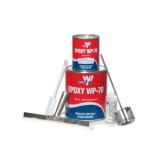 WP-70 Non-Skid Epoxy Coating$298.00WP-70 Non-Skid Epoxy Coating Upgrade your flooring with WP-70 Non-Skid Epoxy Coating, engineered for durability, chemical resistance, and exceptional slip prevention. Ideal for industrial, marine, and commercial environments. Exceptional Slip Resistance: Reduces risk of accidents in wet and dry conditions. Heavy-Duty Durability: Withstands traffic, impact, and harsh chemicals. Versatile
...
WP-70 Non-Skid Epoxy Coating Upgrade your flooring with WP-70 Non-Skid Epoxy Coating, engineered for durability, chemical resistance, and exceptional...
WP-70 Non-Skid Epoxy Coating
Upgrade your flooring with WP-70 Non-Skid Epoxy Coating, engineered for durability, chemical resistance, and exceptional slip prevention. Ideal for industrial, marine, and commercial environments.
- Exceptional Slip Resistance: Reduces risk of accidents in wet and dry conditions.
- Heavy-Duty Durability: Withstands traffic, impact, and harsh chemicals.
- Versatile Application: Bonds to concrete, wood, and metal surfaces.
- Fast Curing: Minimizes downtime with quick-set formula.
- Easy Maintenance: Seamless surface resists stains and simplifies cleaning.
- Thick, Trowel-On System: 2-part epoxy with a tough, long-lasting finish.
- Industrial Strength: Ideal for breweries, canneries, and offshore platforms.
- Application Method: Requires trowel and squeegee for best results.
- Coverage: 25–30 sq ft per gallon; sold in 1-gallon kits per case.
- Low VOC: Eco-conscious formulation with no flash or volatile solvents.
- Pot Life: 30–60 minutes; cures fully in 18–24 hours.
- Note: Mixing blade and squeegee not included.
Designed for harsh industrial and marine environments, this non-skid epoxy coating delivers exceptional durability, chemical resistance, and long-lasting slip protection. WP-70 Epoxy is the trusted choice for commercial floors demanding performance and safety.
↑
WP-70 Non-Skid Epoxy Coating
Upgrade your flooring with WP-70 Non-Skid Epoxy Coating, engineered for durability, chemical resistance, and exceptional slip prevention. Ideal for industrial, marine, and commercial environments.
- Exceptional Slip Resistance: Reduces risk of accidents in wet and dry conditions.
- Heavy-Duty Durability: Withstands traffic, impact, and harsh chemicals.
- Versatile Application: Bonds to concrete, wood, and metal surfaces.
- Fast Curing: Minimizes downtime with quick-set formula.
- Easy Maintenance: Seamless surface resists stains and simplifies cleaning.
- Thick, Trowel-On System: 2-part epoxy with a tough, long-lasting finish.
- Industrial Strength: Ideal for breweries, canneries, and offshore platforms.
- Application Method: Requires trowel and squeegee for best results.
- Coverage: 25–30 sq ft per gallon; sold in 1-gallon kits per case.
- Low VOC: Eco-conscious formulation with no flash or volatile solvents.
- Pot Life: 30–60 minutes; cures fully in 18–24 hours.
- Note: Mixing blade and squeegee not included.
Designed for harsh industrial and marine environments, this non-skid epoxy coating delivers exceptional durability, chemical resistance, and long-lasting slip protection. WP-70 Epoxy is the trusted choice for commercial floors demanding performance and safety.
↑
View Details
View Details
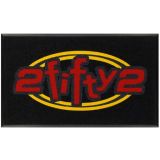 Berber Logo Mats
Starting at $194.00
Berber Logo Mats put your logo at the door on a looped berber surface — a tight, low-profile weave with a subtle hobnail texture that reads as upscale rather than promotional. The logo is digitally printed in high definition, so the artwork stays crisp, and the same tight weave that...
Berber Logo Mats put your logo at the door on a looped berber surface — a tight, low-profile weave with...
Berber Logo Mats put your logo at the door on a looped berber surface — a tight, low-profile weave with a subtle hobnail texture that reads as upscale rather than promotional. The logo is digitally printed in high definition, so the artwork stays crisp, and the same tight weave that holds the print also scrapes dirt and moisture off shoes before either reaches your floor.
What a Berber Logo Mat Does Before Your Brand Looks Tired at the Door
A logo mat is doing two jobs from the moment someone walks up: it shows your brand and it protects the floor. ISSA field data shows a building takes on up to 12 times more dirt during wet weather, and it takes six to eight steps to walk a sole dry. A mat that catches that grit keeps your entrance clean — and keeps the logo from sitting in a smear of tracked-in dirt.
The looped berber weave is tight enough to scrape and hold dirt and moisture, so the floor past the mat stays cleaner and the logo stays legible instead of muddy. That matters because a worn or grimy logo mat does the opposite of its job — it makes the brand look neglected at the exact spot where a visitor forms a first impression.
Why Berber Loop, and Why This One
The surface is needle-punched PET fiber, about 44 ounces per square yard, made with at least 80% recycled content reclaimed from plastic bottles. The loop-pile berber has a smooth, even face, which is what lets the logo print crisply — the artwork is built up in layers of color and matched to a standard palette of 56 colors, so edges and lettering stay sharp.
Berber's tight weave is the durable part. It stands up to heavy foot traffic without the surface breaking down, and the hobnail texture gives it an upscale look that plain printed mats miss. The fiber is naturally stain- and fade-resistant, so the logo holds its color through regular cleaning rather than washing out after a season.
Underneath is an SBR rubber backing that contains 20% recycled tire content and keeps the mat in place to cut slipping. You can spec a universal cleated backing for carpet or a smooth backing for hard floors, and the whole mat sits low — easy to clean by vacuuming or hosing off, and low enough not to catch a door swing.
Where It Belongs (and Where It Doesn't)
This is a branding mat for indoor and covered-outdoor entries — lobbies, front desks, storefronts, building entrances, and anywhere you want a company logo greeting people as they arrive. As premium carpet logo mats go, the berber loop is on the upscale end, and it works equally well as commercial rugs with logo inside reception areas and retail floors.
What it is not is a full-sun outdoor mat. The print fades in direct sunlight, so it belongs under a canopy, an overhang, a vestibule, or indoors — not exposed on an open sidewalk. It's also a branding mat that catches dirt and moisture, not an aggressive scraper for mud and gravel; keep the heaviest debris to a coarse outdoor mat and let the berber handle the finish and the logo.
Three Things to Check Before You Spec It
Three things decide whether a berber logo mat is the right call.
First, the light. The print fades in direct sun, so this mat is for covered or indoor spots only. If your entrance faces open sky for hours a day, a different construction will hold its color better — be honest about the exposure before you commit the logo to it.
Second, the artwork. Logos print best with text at least 1.5 inches tall and lines no thinner than a quarter inch, and very fine detail or pale backgrounds don't translate well — light colors also show dirt faster. Simple, bold artwork in darker or neutral tones reads cleanly and stays looking sharp.
Third, the floor and the size. Choose a cleated backing for carpet or a smooth one for hard floors, and size the mat to the traffic, not just the doorway — aim to cover the six-to-eight steps it takes to dry a sole. Standard sizes run up to 6'×12', with custom lengths to 20 feet.
Why Mats Inc.
Mats Inc. has specified commercial matting since 1964, so when you're putting your brand on the floor, you're working with people who know which logo construction survives your specific entrance — and which will fade or flatten in it. We help you set up the artwork inside the print limits, pick the backing for your floor, and size the run so the mat protects as well as it presents. For the rest of the range, start with our commercial entrance mats.
Specifications Type Custom logo entrance mat — indoor / covered outdoor Surface Needle-punched PET, loop-pile berber with hobnail texture Weight 44 oz/yd² Recycled content At least 80% recycled PET face; SBR rubber backing with 20% recycled tire content Logo HD digital print, color matched to a 56-color standard palette Backing SBR rubber — smooth or universal cleated Colors 56 standard Use Indoor and covered outdoor; not for direct sunlight (print fades) Print limits Minimum text 1.5"; minimum line thickness 1/4" Sizes Standard 2'×3' to 6'×12'; custom widths in lengths up to 20' Warranty 1-year limited (Mats Inc.) Frequently Asked Questions
How is the logo actually printed, and will it stay sharp?
Answered by Dustin Thompson, Owner & CEO
The logo is built up in layers of color on the smooth berber surface and matched to a standard palette of 56 colors. That layering is what gives the high-definition look — crisp edges and clean lettering — as long as the artwork respects the print limits: text at least 1.5 inches tall, lines no thinner than a quarter inch, and no fine tints or transparencies. Bold, simple artwork holds up best. The fiber is naturally stain- and fade-resistant, so the print stays sharp through regular cleaning rather than washing out.
How well does it hold up to heavy traffic?
Answered by Dustin Thompson, Owner & CEO
The tight berber weave is the durable part — it's built to take heavy foot traffic without the surface breaking down, and the hobnail loop holds its texture rather than crushing flat the way a softer pile would. A mat that mats down stops scraping and starts looking worn, so that crush resistance is what keeps both the logo and the floor protection working.
The one thing that shortens its life is sunlight: the print fades in direct sun, so a covered or indoor spot is essential. Used under cover and cleaned regularly — vacuumed, or hosed off and hung to dry — it holds its look for years.
Can I put it outside?
Answered by Dustin Thompson, Owner & CEO
Only under cover. Berber logo mats are made for indoor and covered-outdoor entries — under a canopy, in a vestibule, or inside a lobby. They're not built for full sun, because the print fades when it's exposed directly, and they're branding mats rather than coarse scrapers for mud and gravel. The best setup outdoors is a rugged scraper mat first to take the heavy debris, with the berber logo mat just inside or under the overhang where it stays clean, dry, and out of direct light.
What sizes can I get?
Answered by Jinna Hopson, Vice President of Marketing
Standard sizes run from 2'×3' up to 6'×12', and custom lengths are available in standard widths up to 20 feet — useful for a wide storefront entry or a long lobby walkway.
Size it to the traffic, not just the door opening. Aim to cover the six-to-eight steps it takes to dry a sole, so the mat protects the floor and shows the logo at full size rather than getting walked past in a stride or two.
What does it look like, and what colors are there?
Answered by Jinna Hopson, Vice President of Marketing
It has an upscale, low-profile look — the looped berber weave with a subtle hobnail texture reads as refined rather than promotional, which suits a polished lobby or reception area. There are 56 standard colors to build the logo and background from, so you can match a brand palette closely. One tip: skip very light background colors, since pale tones show tracked-in dirt faster — darker or neutral backgrounds keep the mat looking clean longer between cleanings.
Can it match our exact brand colors, and what artwork works best?
Answered by Jinna Hopson, Vice President of Marketing
Colors are matched to a standard 56-color palette rather than exact PMS values, so it's a close brand match within that range rather than a precise ink match — worth knowing if your brand standard is strict. For artwork, bold logos and clear lettering reproduce beautifully; very fine detail, thin lines, gradients, and transparencies don't translate well to the woven surface. Send us your logo and we'll tell you straight whether it'll read well at mat scale or needs a small adjustment first.
By Jinna Hopson, Vice President of Marketing, Mats Inc.
↑
Berber Logo Mats put your logo at the door on a looped berber surface — a tight, low-profile weave with a subtle hobnail texture that reads as upscale rather than promotional. The logo is digitally printed in high definition, so the artwork stays crisp, and the same tight weave that holds the print also scrapes dirt and moisture off shoes before either reaches your floor.
What a Berber Logo Mat Does Before Your Brand Looks Tired at the Door
A logo mat is doing two jobs from the moment someone walks up: it shows your brand and it protects the floor. ISSA field data shows a building takes on up to 12 times more dirt during wet weather, and it takes six to eight steps to walk a sole dry. A mat that catches that grit keeps your entrance clean — and keeps the logo from sitting in a smear of tracked-in dirt.
The looped berber weave is tight enough to scrape and hold dirt and moisture, so the floor past the mat stays cleaner and the logo stays legible instead of muddy. That matters because a worn or grimy logo mat does the opposite of its job — it makes the brand look neglected at the exact spot where a visitor forms a first impression.
Why Berber Loop, and Why This One
The surface is needle-punched PET fiber, about 44 ounces per square yard, made with at least 80% recycled content reclaimed from plastic bottles. The loop-pile berber has a smooth, even face, which is what lets the logo print crisply — the artwork is built up in layers of color and matched to a standard palette of 56 colors, so edges and lettering stay sharp.
Berber's tight weave is the durable part. It stands up to heavy foot traffic without the surface breaking down, and the hobnail texture gives it an upscale look that plain printed mats miss. The fiber is naturally stain- and fade-resistant, so the logo holds its color through regular cleaning rather than washing out after a season.
Underneath is an SBR rubber backing that contains 20% recycled tire content and keeps the mat in place to cut slipping. You can spec a universal cleated backing for carpet or a smooth backing for hard floors, and the whole mat sits low — easy to clean by vacuuming or hosing off, and low enough not to catch a door swing.
Where It Belongs (and Where It Doesn't)
This is a branding mat for indoor and covered-outdoor entries — lobbies, front desks, storefronts, building entrances, and anywhere you want a company logo greeting people as they arrive. As premium carpet logo mats go, the berber loop is on the upscale end, and it works equally well as commercial rugs with logo inside reception areas and retail floors.
What it is not is a full-sun outdoor mat. The print fades in direct sunlight, so it belongs under a canopy, an overhang, a vestibule, or indoors — not exposed on an open sidewalk. It's also a branding mat that catches dirt and moisture, not an aggressive scraper for mud and gravel; keep the heaviest debris to a coarse outdoor mat and let the berber handle the finish and the logo.
Three Things to Check Before You Spec It
Three things decide whether a berber logo mat is the right call.
First, the light. The print fades in direct sun, so this mat is for covered or indoor spots only. If your entrance faces open sky for hours a day, a different construction will hold its color better — be honest about the exposure before you commit the logo to it.
Second, the artwork. Logos print best with text at least 1.5 inches tall and lines no thinner than a quarter inch, and very fine detail or pale backgrounds don't translate well — light colors also show dirt faster. Simple, bold artwork in darker or neutral tones reads cleanly and stays looking sharp.
Third, the floor and the size. Choose a cleated backing for carpet or a smooth one for hard floors, and size the mat to the traffic, not just the doorway — aim to cover the six-to-eight steps it takes to dry a sole. Standard sizes run up to 6'×12', with custom lengths to 20 feet.
Why Mats Inc.
Mats Inc. has specified commercial matting since 1964, so when you're putting your brand on the floor, you're working with people who know which logo construction survives your specific entrance — and which will fade or flatten in it. We help you set up the artwork inside the print limits, pick the backing for your floor, and size the run so the mat protects as well as it presents. For the rest of the range, start with our commercial entrance mats.
Specifications Type Custom logo entrance mat — indoor / covered outdoor Surface Needle-punched PET, loop-pile berber with hobnail texture Weight 44 oz/yd² Recycled content At least 80% recycled PET face; SBR rubber backing with 20% recycled tire content Logo HD digital print, color matched to a 56-color standard palette Backing SBR rubber — smooth or universal cleated Colors 56 standard Use Indoor and covered outdoor; not for direct sunlight (print fades) Print limits Minimum text 1.5"; minimum line thickness 1/4" Sizes Standard 2'×3' to 6'×12'; custom widths in lengths up to 20' Warranty 1-year limited (Mats Inc.) Frequently Asked Questions
How is the logo actually printed, and will it stay sharp?
Answered by Dustin Thompson, Owner & CEO
The logo is built up in layers of color on the smooth berber surface and matched to a standard palette of 56 colors. That layering is what gives the high-definition look — crisp edges and clean lettering — as long as the artwork respects the print limits: text at least 1.5 inches tall, lines no thinner than a quarter inch, and no fine tints or transparencies. Bold, simple artwork holds up best. The fiber is naturally stain- and fade-resistant, so the print stays sharp through regular cleaning rather than washing out.
How well does it hold up to heavy traffic?
Answered by Dustin Thompson, Owner & CEO
The tight berber weave is the durable part — it's built to take heavy foot traffic without the surface breaking down, and the hobnail loop holds its texture rather than crushing flat the way a softer pile would. A mat that mats down stops scraping and starts looking worn, so that crush resistance is what keeps both the logo and the floor protection working.
The one thing that shortens its life is sunlight: the print fades in direct sun, so a covered or indoor spot is essential. Used under cover and cleaned regularly — vacuumed, or hosed off and hung to dry — it holds its look for years.
Can I put it outside?
Answered by Dustin Thompson, Owner & CEO
Only under cover. Berber logo mats are made for indoor and covered-outdoor entries — under a canopy, in a vestibule, or inside a lobby. They're not built for full sun, because the print fades when it's exposed directly, and they're branding mats rather than coarse scrapers for mud and gravel. The best setup outdoors is a rugged scraper mat first to take the heavy debris, with the berber logo mat just inside or under the overhang where it stays clean, dry, and out of direct light.
What sizes can I get?
Answered by Jinna Hopson, Vice President of Marketing
Standard sizes run from 2'×3' up to 6'×12', and custom lengths are available in standard widths up to 20 feet — useful for a wide storefront entry or a long lobby walkway.
Size it to the traffic, not just the door opening. Aim to cover the six-to-eight steps it takes to dry a sole, so the mat protects the floor and shows the logo at full size rather than getting walked past in a stride or two.
What does it look like, and what colors are there?
Answered by Jinna Hopson, Vice President of Marketing
It has an upscale, low-profile look — the looped berber weave with a subtle hobnail texture reads as refined rather than promotional, which suits a polished lobby or reception area. There are 56 standard colors to build the logo and background from, so you can match a brand palette closely. One tip: skip very light background colors, since pale tones show tracked-in dirt faster — darker or neutral backgrounds keep the mat looking clean longer between cleanings.
Can it match our exact brand colors, and what artwork works best?
Answered by Jinna Hopson, Vice President of Marketing
Colors are matched to a standard 56-color palette rather than exact PMS values, so it's a close brand match within that range rather than a precise ink match — worth knowing if your brand standard is strict. For artwork, bold logos and clear lettering reproduce beautifully; very fine detail, thin lines, gradients, and transparencies don't translate well to the woven surface. Send us your logo and we'll tell you straight whether it'll read well at mat scale or needs a small adjustment first.
By Jinna Hopson, Vice President of Marketing, Mats Inc.
↑
View Details
View Details
 Wonder-Pro Olefin Matting
Starting at $55.00
Wonder Pro Matting is a plush, cut-pile olefin entrance mat made to soak up water and fine dust at the door, in a deep range of colors. Where some entrance mats scrape coarse grit, this one is built to wipe shoes clean and hold moisture and fine dirt — pulling...
Wonder Pro Matting is a plush, cut-pile olefin entrance mat made to soak up water and fine dust at the...
Wonder Pro Matting is a plush, cut-pile olefin entrance mat made to soak up water and fine dust at the door, in a deep range of colors. Where some entrance mats scrape coarse grit, this one is built to wipe shoes clean and hold moisture and fine dirt — pulling it off the sole and keeping it on the mat, so a medium-traffic interior stays cleaner and drier past the threshold.
What Wonder Pro Matting Does Before Water and Dust Reach Your Floor
Most of what dirties an interior floor comes in on shoes — not just mud, but fine dust and moisture you don't always see. ISSA field data shows a building takes on up to 12 times more dirt during wet weather, and it takes six to eight steps to walk a sole dry. A mat at the door is where that gets caught before it spreads onto the floor.
Wonder Pro is built for the fine stuff. The plush cut-pile olefin face holds water and fine dirt rather than letting it pass through — it retains about 60% more liquid and fine dust than a standard mat — and a vinyl backing acts as a moisture barrier, keeping what the mat collects off the floor underneath instead of soaking through to it.
Why a Plush Olefin Surface, and Why This One
The face is cut-pile olefin — a dense, soft polypropylene pile that behaves like carpet and holds moisture deep in the fibers. That plush surface is what lets it pull moisture from shoes: a sole sinks slightly into the pile and leaves water and fine dust behind. The olefin resists fading, staining, mold, and mildew, so it keeps its look and doesn't turn musty as it works.
Underneath is a DINP-free PVC vinyl backing that doubles as a moisture barrier — it grips the floor and stops the water the mat holds from reaching the surface below. This mat holds moisture and fine dust rather than scraping coarse grit: it's rated for medium interior traffic and tuned for the fine stuff, not for knocking heavy mud off boots.
It also comes in a deep set of colors — Black, Castellan Red, Charcoal, Marlin Blue, Pebble Brown, and Walnut — so the mat can match a lobby or reception scheme rather than just sit there in standard gray. The colors are part of the point: this is the entrance mat for spots where the floor is on show.
Where It Belongs (and Where It Doesn't)
This is an interior, medium-traffic mat for spaces where appearance and a clean, dry floor both matter — office building lobbies, small retail floors, banks, churches, motels, and reception areas. It shines a few steps inside the door, finishing the job of drying shoes and catching the fine dust a coarse mat misses.
Where it's the wrong call is outdoors or against heavy mud and grit. As a plush mat it isn't built to scrape coarse debris or take the weather, and a flood of mud would clog the pile. The right setup is a scraper outside or at the first door, with Wonder Pro inside to finish the job — and to look good doing it.
Three Things to Check Before You Spec It
Three things decide whether Wonder Pro fits your entrance.
First, where it sits. Wonder Pro is a moisture-and-dust mat for the interior, after coarse debris is mostly off. If it's the only mat facing a muddy or gritty entrance, it'll load up faster than it can handle; paired with a scraper ahead of it, it does its job for years.
Second, the size. It comes in standard sizes from 2'×3' up to 6'×10', plus rolls and custom sizes up to 11'9" wide — useful for a wide lobby run or an odd opening. Size it to cover the steps it takes to dry a sole, not just the doorway.
Third, the color and the look. With six colors to choose from, pick a tone that fits the space and hides traffic — darker shades like Charcoal and Walnut stay looking clean longer between cleanings, while a color like Marlin Blue or Castellan Red can pick up a brand or interior accent.
Why Mats Inc.
Mats Inc. has specified commercial matting since 1964, so when the floor at your entrance is on display, we help you choose a mat that protects it and looks right doing it — matching the surface, size, and color to the space and the traffic. We'll also tell you when a spot needs a coarse scraper ahead of a plush mat like this rather than the plush mat alone. For the rest of the indoor range, see our all indoor entrance mats.
Specifications Type Indoor entrance mat, medium traffic (moisture & fine dust) Surface Plush cut-pile olefin (polypropylene) Pile weight 18 oz/yd² Thickness 7/16" Backing DINP-free PVC vinyl moisture barrier (3 lb vinyl strength, ASTM D624 die-T) Flammability Passes DOC-FF-1-70 Moisture retention Holds ~60% more liquid and fine dirt than a standard mat Resistance Resists fading, staining, mold, and mildew Colors Black, Castellan Red, Charcoal, Marlin Blue, Pebble Brown, Walnut Standard sizes 2'×3', 3'×4', 3'×5', 3'×6', 3'×8', 3'×10', 4'×6', 4'×8', 4'×10', 6'×10' Roll / custom sizes 3'×60', 4'×60', 6'×60'; custom up to 11'9" × 60' Warranty 1-year limited (Mats Inc.) Frequently Asked Questions
How does a plush mat hold dirt and water?
Answered by Dustin Thompson, Owner & CEO
It's the opposite approach to a hard scraper. The face is a dense cut-pile olefin — a soft, carpet-like pile — and when a shoe presses into it, water and fine dust transfer off the sole and settle down between the fibers, where they stay instead of being tracked on. The pile holds about 60% more liquid and fine dirt than a standard mat. Underneath, a vinyl backing works as a moisture barrier, so the water the mat collects stays in the pile and off the floor below.
How much traffic can it handle, and what wears it out?
Answered by Dustin Thompson, Owner & CEO
It's rated for medium interior traffic — office lobbies, retail floors, reception areas, and similar spaces. In those spots it holds up for years, and the olefin resists fading, staining, mold, and mildew, so it keeps its look and doesn't turn musty as it absorbs moisture.
What wears it out early is the wrong job. A plush pile clogs and mats down if it's left to face heavy mud and grit alone, or placed where far more traffic crosses it than it's rated for. Keep it to medium interior traffic, with coarse debris handled ahead of it, and it lasts.
Can I use it outdoors, and how do I clean it?
Answered by Dustin Thompson, Owner & CEO
Keep it indoors. Wonder Pro is built for interior medium traffic — it isn't made for weather or for scraping heavy outdoor grit, so an exposed exterior door will wear it down fast. Inside, it's the mat that finishes drying shoes a few steps in. To clean it, vacuum regularly and extract or hose it off when it's heavily soiled, then let it dry fully before it goes back down — the olefin resists mold and mildew, but any mat works best dry.
What sizes can I get, and can it be made to fit?
Answered by Jinna Hopson, Vice President of Marketing
Standard sizes run from 2'×3' up to 6'×10', and it also comes in 60-foot rolls. If you need a custom size, it can be made up to 11'9" wide and 60 feet long — wide enough for a full lobby run or an unusual opening.
Size it to the traffic path, not just the door, so it covers the steps it takes to dry a sole. And if the mat will sit out in the open rather than wall-to-wall, ask for edged ends — standard rolls ship without edging unless you specify it.
What does it look like, and what colors are there?
Answered by Jinna Hopson, Vice President of Marketing
It has a plush, carpet-like surface that looks more finished and softer underfoot than a hard ribbed or rubber mat — a good fit for a lobby, bank, church, or reception area where the entrance is on display. There are six colors: Black, Castellan Red, Charcoal, Marlin Blue, Pebble Brown, and Walnut. The colors resist fading and staining, and darker tones like Charcoal and Walnut keep looking clean longer between cleanings, while Castellan Red or Marlin Blue can pick up a brand or interior accent.
Can I match it to our space or get a custom size?
Answered by Jinna Hopson, Vice President of Marketing
On size, yes — custom dimensions up to 11'9" by 60 feet mean you can fit a wide entry or a specific footprint rather than settling for the nearest stock size. On color, the six-color range lets you tie the mat to an interior scheme or a brand palette.
If you want an actual printed logo at the door, that's a different construction — a logo mat — and we can point you to one. Wonder Pro itself is about a clean, colored, plush surface that protects the floor and looks the part, rather than carrying artwork.
By Jinna Hopson, Vice President of Marketing, Mats Inc.
↑
Wonder Pro Matting is a plush, cut-pile olefin entrance mat made to soak up water and fine dust at the door, in a deep range of colors. Where some entrance mats scrape coarse grit, this one is built to wipe shoes clean and hold moisture and fine dirt — pulling it off the sole and keeping it on the mat, so a medium-traffic interior stays cleaner and drier past the threshold.
What Wonder Pro Matting Does Before Water and Dust Reach Your Floor
Most of what dirties an interior floor comes in on shoes — not just mud, but fine dust and moisture you don't always see. ISSA field data shows a building takes on up to 12 times more dirt during wet weather, and it takes six to eight steps to walk a sole dry. A mat at the door is where that gets caught before it spreads onto the floor.
Wonder Pro is built for the fine stuff. The plush cut-pile olefin face holds water and fine dirt rather than letting it pass through — it retains about 60% more liquid and fine dust than a standard mat — and a vinyl backing acts as a moisture barrier, keeping what the mat collects off the floor underneath instead of soaking through to it.
Why a Plush Olefin Surface, and Why This One
The face is cut-pile olefin — a dense, soft polypropylene pile that behaves like carpet and holds moisture deep in the fibers. That plush surface is what lets it pull moisture from shoes: a sole sinks slightly into the pile and leaves water and fine dust behind. The olefin resists fading, staining, mold, and mildew, so it keeps its look and doesn't turn musty as it works.
Underneath is a DINP-free PVC vinyl backing that doubles as a moisture barrier — it grips the floor and stops the water the mat holds from reaching the surface below. This mat holds moisture and fine dust rather than scraping coarse grit: it's rated for medium interior traffic and tuned for the fine stuff, not for knocking heavy mud off boots.
It also comes in a deep set of colors — Black, Castellan Red, Charcoal, Marlin Blue, Pebble Brown, and Walnut — so the mat can match a lobby or reception scheme rather than just sit there in standard gray. The colors are part of the point: this is the entrance mat for spots where the floor is on show.
Where It Belongs (and Where It Doesn't)
This is an interior, medium-traffic mat for spaces where appearance and a clean, dry floor both matter — office building lobbies, small retail floors, banks, churches, motels, and reception areas. It shines a few steps inside the door, finishing the job of drying shoes and catching the fine dust a coarse mat misses.
Where it's the wrong call is outdoors or against heavy mud and grit. As a plush mat it isn't built to scrape coarse debris or take the weather, and a flood of mud would clog the pile. The right setup is a scraper outside or at the first door, with Wonder Pro inside to finish the job — and to look good doing it.
Three Things to Check Before You Spec It
Three things decide whether Wonder Pro fits your entrance.
First, where it sits. Wonder Pro is a moisture-and-dust mat for the interior, after coarse debris is mostly off. If it's the only mat facing a muddy or gritty entrance, it'll load up faster than it can handle; paired with a scraper ahead of it, it does its job for years.
Second, the size. It comes in standard sizes from 2'×3' up to 6'×10', plus rolls and custom sizes up to 11'9" wide — useful for a wide lobby run or an odd opening. Size it to cover the steps it takes to dry a sole, not just the doorway.
Third, the color and the look. With six colors to choose from, pick a tone that fits the space and hides traffic — darker shades like Charcoal and Walnut stay looking clean longer between cleanings, while a color like Marlin Blue or Castellan Red can pick up a brand or interior accent.
Why Mats Inc.
Mats Inc. has specified commercial matting since 1964, so when the floor at your entrance is on display, we help you choose a mat that protects it and looks right doing it — matching the surface, size, and color to the space and the traffic. We'll also tell you when a spot needs a coarse scraper ahead of a plush mat like this rather than the plush mat alone. For the rest of the indoor range, see our all indoor entrance mats.
Specifications Type Indoor entrance mat, medium traffic (moisture & fine dust) Surface Plush cut-pile olefin (polypropylene) Pile weight 18 oz/yd² Thickness 7/16" Backing DINP-free PVC vinyl moisture barrier (3 lb vinyl strength, ASTM D624 die-T) Flammability Passes DOC-FF-1-70 Moisture retention Holds ~60% more liquid and fine dirt than a standard mat Resistance Resists fading, staining, mold, and mildew Colors Black, Castellan Red, Charcoal, Marlin Blue, Pebble Brown, Walnut Standard sizes 2'×3', 3'×4', 3'×5', 3'×6', 3'×8', 3'×10', 4'×6', 4'×8', 4'×10', 6'×10' Roll / custom sizes 3'×60', 4'×60', 6'×60'; custom up to 11'9" × 60' Warranty 1-year limited (Mats Inc.) Frequently Asked Questions
How does a plush mat hold dirt and water?
Answered by Dustin Thompson, Owner & CEO
It's the opposite approach to a hard scraper. The face is a dense cut-pile olefin — a soft, carpet-like pile — and when a shoe presses into it, water and fine dust transfer off the sole and settle down between the fibers, where they stay instead of being tracked on. The pile holds about 60% more liquid and fine dirt than a standard mat. Underneath, a vinyl backing works as a moisture barrier, so the water the mat collects stays in the pile and off the floor below.
How much traffic can it handle, and what wears it out?
Answered by Dustin Thompson, Owner & CEO
It's rated for medium interior traffic — office lobbies, retail floors, reception areas, and similar spaces. In those spots it holds up for years, and the olefin resists fading, staining, mold, and mildew, so it keeps its look and doesn't turn musty as it absorbs moisture.
What wears it out early is the wrong job. A plush pile clogs and mats down if it's left to face heavy mud and grit alone, or placed where far more traffic crosses it than it's rated for. Keep it to medium interior traffic, with coarse debris handled ahead of it, and it lasts.
Can I use it outdoors, and how do I clean it?
Answered by Dustin Thompson, Owner & CEO
Keep it indoors. Wonder Pro is built for interior medium traffic — it isn't made for weather or for scraping heavy outdoor grit, so an exposed exterior door will wear it down fast. Inside, it's the mat that finishes drying shoes a few steps in. To clean it, vacuum regularly and extract or hose it off when it's heavily soiled, then let it dry fully before it goes back down — the olefin resists mold and mildew, but any mat works best dry.
What sizes can I get, and can it be made to fit?
Answered by Jinna Hopson, Vice President of Marketing
Standard sizes run from 2'×3' up to 6'×10', and it also comes in 60-foot rolls. If you need a custom size, it can be made up to 11'9" wide and 60 feet long — wide enough for a full lobby run or an unusual opening.
Size it to the traffic path, not just the door, so it covers the steps it takes to dry a sole. And if the mat will sit out in the open rather than wall-to-wall, ask for edged ends — standard rolls ship without edging unless you specify it.
What does it look like, and what colors are there?
Answered by Jinna Hopson, Vice President of Marketing
It has a plush, carpet-like surface that looks more finished and softer underfoot than a hard ribbed or rubber mat — a good fit for a lobby, bank, church, or reception area where the entrance is on display. There are six colors: Black, Castellan Red, Charcoal, Marlin Blue, Pebble Brown, and Walnut. The colors resist fading and staining, and darker tones like Charcoal and Walnut keep looking clean longer between cleanings, while Castellan Red or Marlin Blue can pick up a brand or interior accent.
Can I match it to our space or get a custom size?
Answered by Jinna Hopson, Vice President of Marketing
On size, yes — custom dimensions up to 11'9" by 60 feet mean you can fit a wide entry or a specific footprint rather than settling for the nearest stock size. On color, the six-color range lets you tie the mat to an interior scheme or a brand palette.
If you want an actual printed logo at the door, that's a different construction — a logo mat — and we can point you to one. Wonder Pro itself is about a clean, colored, plush surface that protects the floor and looks the part, rather than carrying artwork.
By Jinna Hopson, Vice President of Marketing, Mats Inc.
↑
View Details
View Details
 Cross-Over Matting
Starting at $46.00
Cross-Over Matting is a loop-pile entrance mat that scrapes debris and moisture off shoes at the door while starting to dry them — the middle step in a layered entrance setup, between the coarse mat outside and the absorbent mat inside. The looped olefin surface is abrasive enough to clean...
Cross-Over Matting is a loop-pile entrance mat that scrapes debris and moisture off shoes at the door while starting to...
Cross-Over Matting is a loop-pile entrance mat that scrapes debris and moisture off shoes at the door while starting to dry them — the middle step in a layered entrance setup, between the coarse mat outside and the absorbent mat inside. The looped olefin surface is abrasive enough to clean shoes and resilient enough to hold its look in steady commercial traffic.
What Cross-Over Matting Does Before Dirt and Water Reach Your Floor
Dirt and water come into a building on shoes — and one mat at the threshold usually can't catch all of it. ISSA field data shows a building takes on up to 12 times more dirt during wet weather, and it takes six to eight steps to walk a sole dry. The most effective entrances use more than one mat to catch debris in stages.
Cross-Over is built to be the middle of that sequence. Its abrasive loop-pile surface scrapes off the grit and moisture a coarse outdoor mat leaves behind, and the sturdy olefin fibers begin drying the shoe before someone steps onto the floor or onto a softer absorbent mat further in. It's non-absorbent by design — it cleans the shoe and passes it along rather than soaking up and holding water.
Why a Loop-Pile Olefin Surface, and Why This One
The surface is a loop pile built from polypropylene ribbon yarn and continuous filament yarn — a combination that gives it an abrasive, hard-wearing texture rather than a soft plush one. That loop scrapes debris off the bottom of shoes and resists crushing, so it keeps its cleaning bite and its appearance instead of matting down into flat lanes under traffic.
The olefin fiber resists fading and crushing, which is what lets a loop-pile mat keep a tidy, finished look at a visible entrance over time. The loop construction reads richer than a flat ribbed mat, so it suits a lobby or front-of-house spot where appearance counts — while still doing real scraping work.
Underneath is a DINP-free PVC vinyl backing that grips the floor and protects it from whatever the mat scrapes off. It holds the mat flat on hard floors and low carpet, and at 5/16 inch the whole mat stays low enough not to catch a door swing or trip a foot at the edge.
Where It Belongs (and Where It Doesn't)
Cross-Over fits interior, medium-traffic entrances — convenience stores, restaurants, hotels, theaters, museums, and convention centers, where a steady stream of people crosses the threshold and the entrance is on view. It's certified high-traction by the National Floor Safety Institute, so it gives a safe surface where shoes arrive wet.
Where it falls short is as a building's only mat or as an outdoor scraper. It's the middle of a system, not the whole system: against heavy mud it wants a coarse scraper ahead of it, and because it's non-absorbent, a wet climate benefits from an absorbent mat inside it to finish the drying. Outdoors and in full weather, it isn't the right construction.
Three Things to Check Before You Spec It
Three things decide whether Cross-Over fits your entrance.
First, the rest of your matting. Cross-Over works best as the middle mat — a coarse scraper outside, this loop-pile mat at the door, and an absorbent mat inside. If it's going in alone, be honest about how much dirt and water it'll face, because one mat rarely catches it all.
Second, the size. Standard sizes run from 2'×3' up to 6'×10', and larger sizes over 6 feet — up to 11'9" — are made by seaming. Plan for that seam on the widest runs, and size the mat to cover the steps it takes to dry a sole, not just the doorway.
Third, the floor and the finish. The vinyl backing suits hard floors and low carpet and protects the surface beneath. If the mat will sit out in the open rather than wall-to-wall, order edged ends — standard rolls ship without edging unless you ask for it.
Why Mats Inc.
Mats Inc. has specified commercial entrance matting since 1964, so we don't just sell you a mat — we help you build the entrance. For a real front door we'll map the whole sequence, from the coarse scraper outside to the loop-pile mat at the threshold to the absorbent mat inside, and tell you where Cross-Over fits in yours. We match construction to traffic and size to the doorway. For the rest of the indoor range, see our all indoor entrance mats.
Specifications Type Indoor entrance mat, medium traffic Surface Loop-pile olefin (polypropylene ribbon + continuous filament yarn) Surface behavior Non-absorbent, abrasive; scrapes debris and moisture, begins drying; resists fading and crushing Pile weight 18 oz/yd² Thickness 5/16" Backing DINP-free PVC vinyl (4 lb vinyl strength, ASTM D624 die-T) Flammability Passes DOC-FF-1-70 Traction Certified high-traction by the National Floor Safety Institute (NFSI) Colors Brown, Gray (two-tone) Standard sizes 2'×3', 3'×4', 3'×5', 3'×6', 3'×8', 3'×10', 4'×6', 4'×8', 4'×10', 6'×10' Custom / roll sizes Over 6' up to 11'9" (seamed); rolls 3'×60', 4'×60', 6'×60' Warranty 1-year limited (Mats Inc.) Frequently Asked Questions
How does a loop-pile mat clean shoes?
Answered by Dustin Thompson, Owner & CEO
The surface is a loop pile made from polypropylene ribbon and filament yarn — a tough, slightly abrasive texture rather than a soft plush one. As a shoe crosses it, the loops scrape grit and surface moisture off the sole, and the olefin fibers start drying the shoe. It's non-absorbent on purpose: instead of soaking up and holding water like a plush mat, it cleans the shoe and passes it along, which is why it works best as one mat in a layered entrance rather than the only one.
Will it crush down or fade in a busy entrance?
Answered by Dustin Thompson, Owner & CEO
It's built to resist both. The loop-pile construction is crush-resistant, so it holds its texture instead of matting flat into shiny traffic lanes, and the olefin fiber resists fading, so the color stays even at a visible entrance. Those two things are what usually go first on a loop mat, and they're the ones this construction is made to hold.
It's rated for medium interior traffic — convenience stores, restaurants, hotels, and similar spots. Pushed past that, or left to face heavy mud alone, any loop mat loads up and wears faster, so the way to get years out of it is to keep it to medium traffic with coarser debris handled ahead of it.
Can I use it by itself, or outdoors?
Answered by Dustin Thompson, Owner & CEO
It's designed as the middle mat in a layered entrance, not a standalone or an outdoor mat. The best setup is a coarse scraper outside to take heavy debris, Cross-Over at the threshold to scrape off what's left and start drying, and an absorbent mat just inside to finish — because Cross-Over is non-absorbent, it doesn't hold much water on its own. Used alone at a busy or wet door, more gets past it than you'd want; outdoors, it isn't built for the weather.
What sizes can I get?
Answered by Jinna Hopson, Vice President of Marketing
Standard sizes run from 2'×3' up to 6'×10', and it comes in 60-foot rolls. Larger mats over 6 feet — up to 11'9" — are made by seaming panels together, so a wide lobby run is possible, just with a seam in it.
Size the mat to the traffic path, not only the door, so it covers the steps it takes to dry a sole. If it'll sit out in the open rather than wall-to-wall, ask for edged ends — standard rolls ship without edging unless you specify it.
What does it look like, and what colors are there?
Answered by Jinna Hopson, Vice President of Marketing
The loop-pile surface has a richer, more textured look than a flat ribbed or rubber mat, which is why it suits a front-of-house entrance — a hotel lobby, a restaurant, a museum — where the floor is on display. It comes in two two-tone colors, Brown and Gray, both designed to blend with common interior schemes and hide tracked-in dirt between cleanings. The two-tone effect helps the mat read as finished rather than utilitarian while it does its work.
Can I get it in a custom size or with our logo?
Answered by Jinna Hopson, Vice President of Marketing
On size, yes within limits — beyond the standard sizes, widths over 6 feet up to 11'9" are made by seaming, so you can cover a wider entrance with a seam in the mat. On a logo, no: Cross-Over is a plain two-color loop mat, not a printed or logo construction. If you want branding at the door, that's a different product — a logo mat — and we can point you to one. For a clean, hard-wearing mat that looks the part at a front entrance, Cross-Over does that without the artwork.
By Dustin Thompson, Owner & CEO, Mats Inc.
↑
Cross-Over Matting is a loop-pile entrance mat that scrapes debris and moisture off shoes at the door while starting to dry them — the middle step in a layered entrance setup, between the coarse mat outside and the absorbent mat inside. The looped olefin surface is abrasive enough to clean shoes and resilient enough to hold its look in steady commercial traffic.
What Cross-Over Matting Does Before Dirt and Water Reach Your Floor
Dirt and water come into a building on shoes — and one mat at the threshold usually can't catch all of it. ISSA field data shows a building takes on up to 12 times more dirt during wet weather, and it takes six to eight steps to walk a sole dry. The most effective entrances use more than one mat to catch debris in stages.
Cross-Over is built to be the middle of that sequence. Its abrasive loop-pile surface scrapes off the grit and moisture a coarse outdoor mat leaves behind, and the sturdy olefin fibers begin drying the shoe before someone steps onto the floor or onto a softer absorbent mat further in. It's non-absorbent by design — it cleans the shoe and passes it along rather than soaking up and holding water.
Why a Loop-Pile Olefin Surface, and Why This One
The surface is a loop pile built from polypropylene ribbon yarn and continuous filament yarn — a combination that gives it an abrasive, hard-wearing texture rather than a soft plush one. That loop scrapes debris off the bottom of shoes and resists crushing, so it keeps its cleaning bite and its appearance instead of matting down into flat lanes under traffic.
The olefin fiber resists fading and crushing, which is what lets a loop-pile mat keep a tidy, finished look at a visible entrance over time. The loop construction reads richer than a flat ribbed mat, so it suits a lobby or front-of-house spot where appearance counts — while still doing real scraping work.
Underneath is a DINP-free PVC vinyl backing that grips the floor and protects it from whatever the mat scrapes off. It holds the mat flat on hard floors and low carpet, and at 5/16 inch the whole mat stays low enough not to catch a door swing or trip a foot at the edge.
Where It Belongs (and Where It Doesn't)
Cross-Over fits interior, medium-traffic entrances — convenience stores, restaurants, hotels, theaters, museums, and convention centers, where a steady stream of people crosses the threshold and the entrance is on view. It's certified high-traction by the National Floor Safety Institute, so it gives a safe surface where shoes arrive wet.
Where it falls short is as a building's only mat or as an outdoor scraper. It's the middle of a system, not the whole system: against heavy mud it wants a coarse scraper ahead of it, and because it's non-absorbent, a wet climate benefits from an absorbent mat inside it to finish the drying. Outdoors and in full weather, it isn't the right construction.
Three Things to Check Before You Spec It
Three things decide whether Cross-Over fits your entrance.
First, the rest of your matting. Cross-Over works best as the middle mat — a coarse scraper outside, this loop-pile mat at the door, and an absorbent mat inside. If it's going in alone, be honest about how much dirt and water it'll face, because one mat rarely catches it all.
Second, the size. Standard sizes run from 2'×3' up to 6'×10', and larger sizes over 6 feet — up to 11'9" — are made by seaming. Plan for that seam on the widest runs, and size the mat to cover the steps it takes to dry a sole, not just the doorway.
Third, the floor and the finish. The vinyl backing suits hard floors and low carpet and protects the surface beneath. If the mat will sit out in the open rather than wall-to-wall, order edged ends — standard rolls ship without edging unless you ask for it.
Why Mats Inc.
Mats Inc. has specified commercial entrance matting since 1964, so we don't just sell you a mat — we help you build the entrance. For a real front door we'll map the whole sequence, from the coarse scraper outside to the loop-pile mat at the threshold to the absorbent mat inside, and tell you where Cross-Over fits in yours. We match construction to traffic and size to the doorway. For the rest of the indoor range, see our all indoor entrance mats.
Specifications Type Indoor entrance mat, medium traffic Surface Loop-pile olefin (polypropylene ribbon + continuous filament yarn) Surface behavior Non-absorbent, abrasive; scrapes debris and moisture, begins drying; resists fading and crushing Pile weight 18 oz/yd² Thickness 5/16" Backing DINP-free PVC vinyl (4 lb vinyl strength, ASTM D624 die-T) Flammability Passes DOC-FF-1-70 Traction Certified high-traction by the National Floor Safety Institute (NFSI) Colors Brown, Gray (two-tone) Standard sizes 2'×3', 3'×4', 3'×5', 3'×6', 3'×8', 3'×10', 4'×6', 4'×8', 4'×10', 6'×10' Custom / roll sizes Over 6' up to 11'9" (seamed); rolls 3'×60', 4'×60', 6'×60' Warranty 1-year limited (Mats Inc.) Frequently Asked Questions
How does a loop-pile mat clean shoes?
Answered by Dustin Thompson, Owner & CEO
The surface is a loop pile made from polypropylene ribbon and filament yarn — a tough, slightly abrasive texture rather than a soft plush one. As a shoe crosses it, the loops scrape grit and surface moisture off the sole, and the olefin fibers start drying the shoe. It's non-absorbent on purpose: instead of soaking up and holding water like a plush mat, it cleans the shoe and passes it along, which is why it works best as one mat in a layered entrance rather than the only one.
Will it crush down or fade in a busy entrance?
Answered by Dustin Thompson, Owner & CEO
It's built to resist both. The loop-pile construction is crush-resistant, so it holds its texture instead of matting flat into shiny traffic lanes, and the olefin fiber resists fading, so the color stays even at a visible entrance. Those two things are what usually go first on a loop mat, and they're the ones this construction is made to hold.
It's rated for medium interior traffic — convenience stores, restaurants, hotels, and similar spots. Pushed past that, or left to face heavy mud alone, any loop mat loads up and wears faster, so the way to get years out of it is to keep it to medium traffic with coarser debris handled ahead of it.
Can I use it by itself, or outdoors?
Answered by Dustin Thompson, Owner & CEO
It's designed as the middle mat in a layered entrance, not a standalone or an outdoor mat. The best setup is a coarse scraper outside to take heavy debris, Cross-Over at the threshold to scrape off what's left and start drying, and an absorbent mat just inside to finish — because Cross-Over is non-absorbent, it doesn't hold much water on its own. Used alone at a busy or wet door, more gets past it than you'd want; outdoors, it isn't built for the weather.
What sizes can I get?
Answered by Jinna Hopson, Vice President of Marketing
Standard sizes run from 2'×3' up to 6'×10', and it comes in 60-foot rolls. Larger mats over 6 feet — up to 11'9" — are made by seaming panels together, so a wide lobby run is possible, just with a seam in it.
Size the mat to the traffic path, not only the door, so it covers the steps it takes to dry a sole. If it'll sit out in the open rather than wall-to-wall, ask for edged ends — standard rolls ship without edging unless you specify it.
What does it look like, and what colors are there?
Answered by Jinna Hopson, Vice President of Marketing
The loop-pile surface has a richer, more textured look than a flat ribbed or rubber mat, which is why it suits a front-of-house entrance — a hotel lobby, a restaurant, a museum — where the floor is on display. It comes in two two-tone colors, Brown and Gray, both designed to blend with common interior schemes and hide tracked-in dirt between cleanings. The two-tone effect helps the mat read as finished rather than utilitarian while it does its work.
Can I get it in a custom size or with our logo?
Answered by Jinna Hopson, Vice President of Marketing
On size, yes within limits — beyond the standard sizes, widths over 6 feet up to 11'9" are made by seaming, so you can cover a wider entrance with a seam in the mat. On a logo, no: Cross-Over is a plain two-color loop mat, not a printed or logo construction. If you want branding at the door, that's a different product — a logo mat — and we can point you to one. For a clean, hard-wearing mat that looks the part at a front entrance, Cross-Over does that without the artwork.
By Dustin Thompson, Owner & CEO, Mats Inc.
↑
View Details
View Details
 Heronair Matting
Starting at $588.00
What Heronair does before a wet work floor causes a fall In a busy work area, the floor gets wet and stays wet — washdown, splashes, drips, tracked-in water. It's easy to assume a quick mop or a coat of non-slip paint keeps people safe. The catch is that water...
What Heronair does before a wet work floor causes a fall In a busy work area, the floor gets wet...
What Heronair does before a wet work floor causes a fall
In a busy work area, the floor gets wet and stays wet — washdown, splashes, drips, tracked-in water. It's easy to assume a quick mop or a coat of non-slip paint keeps people safe. The catch is that water spreads into a thin film on a hard floor, right where people walk and stand, and a painted or tiled surface that grips dry can turn slick the moment it's wet.
Heronair is built to take that film out of play. It's an open-grid PVC mat that's impermeable to fluids, so water and debris drop through and disperse below the surface instead of pooling on top. The etched surface gives shoes traction, and the mat keeps draining even when the floor around it is soaked. That's the difference between a real non-slip wet-area mat and a surface that only behaves when it's dry.
A wet, slick work floor isn't a minor nuisance. The National Floor Safety Institute ties wet, hard floors to a large share of slip, trip, and fall injuries, and a walkway or wet work zone keeps feeding that risk shift after shift. A mat that drains the water away and holds grip underfoot is doing safety work the whole time it's down.
Why a lightweight tubular PVC build, and why this one
Heronair is made from non-porous PVC in a two-layer, tubular construction — and that hollow build is the heart of what makes it different. The tubes make the mat genuinely light: at around 0.9 pounds per square foot, it's easy to lift, roll, and reposition by hand. In a space where mats get pulled up for cleaning or moved between tasks, that lightness is a real day-to-day advantage.
The same open structure that keeps it light also keeps it draining. Liquids pass straight through and clear away beneath the mat, and it's certified slip resistant at R11 with V10 drainage under DIN 51130. Grip comes from an etched surface, so traction is strongest across the lines of the pattern. The hollow body also insulates against a cold floor and absorbs sound, taking some of the chill and clatter out of a hard work area.
Because people stand on these floors for hours, the cushioning matters. The give in the tubular build reduces fatigue underfoot, which is easier on legs and backs than bare concrete. The PVC itself resists most acids, alkalines, and oils, handles UV without degrading, and works from below freezing up to 140°F. Made in black, it's produced from post-industrial recycled material — averaging at least 30% recycled content — and the whole mat is 100% recyclable.
Where it belongs — and what it isn't
Heronair belongs in wet, working spaces where people are on their feet in shoes. Think light-industrial areas and walkways, washdown zones, beverage and prep stations, and the wet service and back-of-house areas around a pool — pump and equipment rooms, plant rooms, and staff walkways — rather than the barefoot deck itself. Wherever liquids underfoot meet standing workers, it earns its place.
It's worth being clear about what this mat is not. It's a shod, walk-on work mat — not a barefoot-certified pool mat, not a flotation device, and not the liner sheet that goes under an above-ground pool. For the barefoot pool deck, shower, or changing room, a barefoot-rated mat is the right call. Heronair's job is the working wet floor, in shoes, where drainage and anti-fatigue support matter most.
How it goes down is simple. It comes in 33-foot rolls, cuts to fit on site, and contours to uneven surfaces, so it follows a real floor instead of fighting it. For larger areas, rolls join side-to-side and end-to-end with connector clips or welded snap track, and ramped edging finishes an exposed border so the mat doesn't become a trip point.
Three Things to Check Before You Spec It
Heronair is easy to order well once you've thought through three things.
First, match it to the duty. This is the lighter, more versatile end of wet-area matting — ideal where you want easy handling, anti-fatigue support, and reliable drainage in shoes. For the most punishing wet floors or the highest wet-grip demands, a heavier, higher-traction mat may suit better. Be honest about how hard the floor gets worked before you choose.
Second, measure the whole wet path and plan the joins. Size the mat to cover wherever liquid actually reaches — the full washdown zone, the length of a walkway — since a dry-foot gap is where the next slip waits. For bigger areas, map where rolls will join with clips or snap track and where ramped edging finishes the border.
Third, plan for heat and movement. The PVC handles a wide temperature range, but like any thermoplastic it can shrink slightly — up to about 2%, faster in heat — so in a hot space or an exposed spot, leave a little room at fixed edges rather than butting it tight wall to wall, and use edging or clips to keep sections in place.
Why Mats Inc.
We've been matching mats to real floors since 1964, and wet work areas are where the wrong mat shows up fastest — in sore legs, slick steps, and mats too heavy to bother moving. We'll help you decide whether Heronair's lightweight, easy-handling build fits your space or whether a heavier mat suits the duty, size it to your actual wet path, and plan the seams and edging. It's part of our wider lineup of pool and wet-area matting, and every order is backed by our 1-year limited warranty.
Material Non-porous flexible PVC Construction Two-layer tubular (hollow); etched open-grid surface Thickness 3/8" (10 mm) Weight 0.9 lb / sq ft Roll options 33' lengths in 2', 3', and 4' widths (cut to fit on site) Custom sizes Custom matting available Slip resistance DIN 51130: R11; ASTM F1677: 0.6/0.6; ASTM E303 wet: 58–77 (by direction) Drainage DIN 51130: V10 Chemical resistance Most acids, alkalines, and oils Temperature range -9°F to +140°F Hygiene Non-porous PVC; naturally resists bacteria growth Acoustic / thermal Sound absorption; insulating Environmental 100% recyclable; black made from ≥30% post-industrial recycled content; no SVHC (REACH) UV Resists PVC degradation Color Black (other colors available) Warranty 1-year limited (Mats Inc.) Frequently Asked Questions
What's Heronair made of, and why is it so light?
Answered by Dustin Thompson, Owner & CEO
It's made from non-porous PVC in a two-layer, tubular construction — essentially an open grid of hollow tubes. That hollow build is why it's light: about 0.9 pounds per square foot, easy to lift, roll, and move by hand. The open structure also means it's impermeable to fluids — water and debris drop straight through and clear away underneath instead of pooling on top. So the same thing that makes it light also makes it drain, and keeps the walking surface usable when the floor's wet.
How slip-resistant and tough is it, especially with chemicals around?
Answered by Dustin Thompson, Owner & CEO
It's certified slip resistant at R11 with V10 drainage under DIN 51130, with traction coming from an etched surface — grip is strongest across the lines of the pattern, reading 58 to 77 wet on the ASTM E303 pendulum test depending on direction. On toughness, the PVC resists most acids, alkalines, and oils, stands up to UV without degrading, and works from below freezing up to 140°F. That's what lets the same mat hold up in a washdown area, a chemical-prone work zone, or an outdoor walkway without going brittle.
What sizes does it come in, and can it cover a large floor?
Answered by Dustin Thompson, Owner & CEO
It comes in 33-foot rolls in 2-, 3-, and 4-foot widths, and you cut it to fit on site. For a large floor, rolls join side-to-side and end-to-end with connector clips or welded snap track, so you can cover a whole walkway or work area in one continuous surface. Because it contours to uneven ground, it follows a real floor rather than needing a perfectly flat one, and custom matting is available when a standard width won't fit.
Can I use this around a pool, or is it really a workplace mat?
Answered by Jinna Hopson, VP of Marketing
It's really a workplace mat, and that's where it shines — light-industrial areas, walkways, washdown and prep zones. Around a pool, its place is the working, in-shoes areas: pump and plant rooms, staff walkways, and back-of-house service spaces, rather than the barefoot deck or shower. For those barefoot areas you'd want a barefoot-rated pool mat instead. If your space is a wet floor where people work on their feet in shoes, Heronair fits.
What does it look like underfoot?
Answered by Jinna Hopson, VP of Marketing
It has a practical, industrial look — an open, etched grid that clearly reads as a working surface built to drain and grip, not as decoration. The standard color is black, which is the easy choice for a work area because it hides the grit, oil, and debris these floors collect between cleanings; the black version is also the one made from recycled material. Other colors are available if you want to mark off a zone or match a scheme — tell us what you need and we'll confirm the options.
My work area has an awkward layout — will it fit, and is it easy to live with?
Answered by Jinna Hopson, VP of Marketing
Yes on both counts. Because it cuts to fit on site and contours to uneven surfaces, you can shape a run around machinery, drains, and corners instead of forcing the space to match a fixed mat. And it's genuinely easy to live with day to day: it's light enough to lift or roll up for cleaning by hand, needs no special tools, and rinses down with a hose. Send us your layout and we'll help you plan widths, joins, and edging.
Written by Dustin Thompson, Owner & CEO, Mats Inc.
↑
What Heronair does before a wet work floor causes a fall
In a busy work area, the floor gets wet and stays wet — washdown, splashes, drips, tracked-in water. It's easy to assume a quick mop or a coat of non-slip paint keeps people safe. The catch is that water spreads into a thin film on a hard floor, right where people walk and stand, and a painted or tiled surface that grips dry can turn slick the moment it's wet.
Heronair is built to take that film out of play. It's an open-grid PVC mat that's impermeable to fluids, so water and debris drop through and disperse below the surface instead of pooling on top. The etched surface gives shoes traction, and the mat keeps draining even when the floor around it is soaked. That's the difference between a real non-slip wet-area mat and a surface that only behaves when it's dry.
A wet, slick work floor isn't a minor nuisance. The National Floor Safety Institute ties wet, hard floors to a large share of slip, trip, and fall injuries, and a walkway or wet work zone keeps feeding that risk shift after shift. A mat that drains the water away and holds grip underfoot is doing safety work the whole time it's down.
Why a lightweight tubular PVC build, and why this one
Heronair is made from non-porous PVC in a two-layer, tubular construction — and that hollow build is the heart of what makes it different. The tubes make the mat genuinely light: at around 0.9 pounds per square foot, it's easy to lift, roll, and reposition by hand. In a space where mats get pulled up for cleaning or moved between tasks, that lightness is a real day-to-day advantage.
The same open structure that keeps it light also keeps it draining. Liquids pass straight through and clear away beneath the mat, and it's certified slip resistant at R11 with V10 drainage under DIN 51130. Grip comes from an etched surface, so traction is strongest across the lines of the pattern. The hollow body also insulates against a cold floor and absorbs sound, taking some of the chill and clatter out of a hard work area.
Because people stand on these floors for hours, the cushioning matters. The give in the tubular build reduces fatigue underfoot, which is easier on legs and backs than bare concrete. The PVC itself resists most acids, alkalines, and oils, handles UV without degrading, and works from below freezing up to 140°F. Made in black, it's produced from post-industrial recycled material — averaging at least 30% recycled content — and the whole mat is 100% recyclable.
Where it belongs — and what it isn't
Heronair belongs in wet, working spaces where people are on their feet in shoes. Think light-industrial areas and walkways, washdown zones, beverage and prep stations, and the wet service and back-of-house areas around a pool — pump and equipment rooms, plant rooms, and staff walkways — rather than the barefoot deck itself. Wherever liquids underfoot meet standing workers, it earns its place.
It's worth being clear about what this mat is not. It's a shod, walk-on work mat — not a barefoot-certified pool mat, not a flotation device, and not the liner sheet that goes under an above-ground pool. For the barefoot pool deck, shower, or changing room, a barefoot-rated mat is the right call. Heronair's job is the working wet floor, in shoes, where drainage and anti-fatigue support matter most.
How it goes down is simple. It comes in 33-foot rolls, cuts to fit on site, and contours to uneven surfaces, so it follows a real floor instead of fighting it. For larger areas, rolls join side-to-side and end-to-end with connector clips or welded snap track, and ramped edging finishes an exposed border so the mat doesn't become a trip point.
Three Things to Check Before You Spec It
Heronair is easy to order well once you've thought through three things.
First, match it to the duty. This is the lighter, more versatile end of wet-area matting — ideal where you want easy handling, anti-fatigue support, and reliable drainage in shoes. For the most punishing wet floors or the highest wet-grip demands, a heavier, higher-traction mat may suit better. Be honest about how hard the floor gets worked before you choose.
Second, measure the whole wet path and plan the joins. Size the mat to cover wherever liquid actually reaches — the full washdown zone, the length of a walkway — since a dry-foot gap is where the next slip waits. For bigger areas, map where rolls will join with clips or snap track and where ramped edging finishes the border.
Third, plan for heat and movement. The PVC handles a wide temperature range, but like any thermoplastic it can shrink slightly — up to about 2%, faster in heat — so in a hot space or an exposed spot, leave a little room at fixed edges rather than butting it tight wall to wall, and use edging or clips to keep sections in place.
Why Mats Inc.
We've been matching mats to real floors since 1964, and wet work areas are where the wrong mat shows up fastest — in sore legs, slick steps, and mats too heavy to bother moving. We'll help you decide whether Heronair's lightweight, easy-handling build fits your space or whether a heavier mat suits the duty, size it to your actual wet path, and plan the seams and edging. It's part of our wider lineup of pool and wet-area matting, and every order is backed by our 1-year limited warranty.
Material Non-porous flexible PVC Construction Two-layer tubular (hollow); etched open-grid surface Thickness 3/8" (10 mm) Weight 0.9 lb / sq ft Roll options 33' lengths in 2', 3', and 4' widths (cut to fit on site) Custom sizes Custom matting available Slip resistance DIN 51130: R11; ASTM F1677: 0.6/0.6; ASTM E303 wet: 58–77 (by direction) Drainage DIN 51130: V10 Chemical resistance Most acids, alkalines, and oils Temperature range -9°F to +140°F Hygiene Non-porous PVC; naturally resists bacteria growth Acoustic / thermal Sound absorption; insulating Environmental 100% recyclable; black made from ≥30% post-industrial recycled content; no SVHC (REACH) UV Resists PVC degradation Color Black (other colors available) Warranty 1-year limited (Mats Inc.) Frequently Asked Questions
What's Heronair made of, and why is it so light?
Answered by Dustin Thompson, Owner & CEO
It's made from non-porous PVC in a two-layer, tubular construction — essentially an open grid of hollow tubes. That hollow build is why it's light: about 0.9 pounds per square foot, easy to lift, roll, and move by hand. The open structure also means it's impermeable to fluids — water and debris drop straight through and clear away underneath instead of pooling on top. So the same thing that makes it light also makes it drain, and keeps the walking surface usable when the floor's wet.
How slip-resistant and tough is it, especially with chemicals around?
Answered by Dustin Thompson, Owner & CEO
It's certified slip resistant at R11 with V10 drainage under DIN 51130, with traction coming from an etched surface — grip is strongest across the lines of the pattern, reading 58 to 77 wet on the ASTM E303 pendulum test depending on direction. On toughness, the PVC resists most acids, alkalines, and oils, stands up to UV without degrading, and works from below freezing up to 140°F. That's what lets the same mat hold up in a washdown area, a chemical-prone work zone, or an outdoor walkway without going brittle.
What sizes does it come in, and can it cover a large floor?
Answered by Dustin Thompson, Owner & CEO
It comes in 33-foot rolls in 2-, 3-, and 4-foot widths, and you cut it to fit on site. For a large floor, rolls join side-to-side and end-to-end with connector clips or welded snap track, so you can cover a whole walkway or work area in one continuous surface. Because it contours to uneven ground, it follows a real floor rather than needing a perfectly flat one, and custom matting is available when a standard width won't fit.
Can I use this around a pool, or is it really a workplace mat?
Answered by Jinna Hopson, VP of Marketing
It's really a workplace mat, and that's where it shines — light-industrial areas, walkways, washdown and prep zones. Around a pool, its place is the working, in-shoes areas: pump and plant rooms, staff walkways, and back-of-house service spaces, rather than the barefoot deck or shower. For those barefoot areas you'd want a barefoot-rated pool mat instead. If your space is a wet floor where people work on their feet in shoes, Heronair fits.
What does it look like underfoot?
Answered by Jinna Hopson, VP of Marketing
It has a practical, industrial look — an open, etched grid that clearly reads as a working surface built to drain and grip, not as decoration. The standard color is black, which is the easy choice for a work area because it hides the grit, oil, and debris these floors collect between cleanings; the black version is also the one made from recycled material. Other colors are available if you want to mark off a zone or match a scheme — tell us what you need and we'll confirm the options.
My work area has an awkward layout — will it fit, and is it easy to live with?
Answered by Jinna Hopson, VP of Marketing
Yes on both counts. Because it cuts to fit on site and contours to uneven surfaces, you can shape a run around machinery, drains, and corners instead of forcing the space to match a fixed mat. And it's genuinely easy to live with day to day: it's light enough to lift or roll up for cleaning by hand, needs no special tools, and rinses down with a hose. Send us your layout and we'll help you plan widths, joins, and edging.
Written by Dustin Thompson, Owner & CEO, Mats Inc.
↑
View Details
View Details
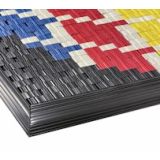 Vinyl Link Mat
Starting at $209.00
A Spaghetti Mat is an open, coiled-vinyl scraper — the looped surface looks like a tangle of spaghetti, and that tangle is what pulls mud and grit off shoes at the door. It is a light-traffic outdoor scraper that drains and dries fast, made to keep debris outside the...
A Spaghetti Mat is an open, coiled-vinyl scraper — the looped surface looks like a tangle of spaghetti, and...
A Spaghetti Mat is an open, coiled-vinyl scraper — the looped surface looks like a tangle of spaghetti, and that tangle is what pulls mud and grit off shoes at the door. It is a light-traffic outdoor scraper that drains and dries fast, made to keep debris outside the building instead of tracked across the floor inside.
What a Spaghetti Mat Does Before the Dirt Gets Inside
An outdoor entrance is where most of a building's dirt arrives. A scraper mat's job is to take that dirt off shoes before it crosses the threshold — and that matters, because ISSA field data shows about twelve times more dirt enters a building during wet weather. The coiled loops scrape from every direction and let the loosened grit and water fall through to the surface below, so it stays off the floor inside.
Why Coiled Vinyl, and Why This One
The mat is built from looped PVC — vinyl coiled into an open, springy surface about three-eighths of an inch thick. The loops run in no single direction, so they scrape a shoe no matter which way someone steps. The vinyl resists mildew and fading, and the open structure dries quickly instead of staying soggy after rain.
It comes two ways. A backed version has a foam backing that helps it sit still on a hard floor; an unbacked version skips the backing so water runs straight through, which suits a recessed well or any spot where drainage matters. Both are slip-resistant, and either can be finished with an applied vinyl edge.
Where It Belongs, and Where It Doesn't
A Spaghetti Mat fits lighter-traffic entrances — office buildings, small retail stores, banks, post offices, churches, and motels — and it is at its best outdoors, where draining and scraping count more than a finished look. It works in a surface spot or dropped into a recessed well, and it sits in our range of exterior entrance mats for the door that needs a workhorse scraper.
What it is not is a heavy-traffic mat or a drying mat. It is rated for light to medium use, so a high-volume entrance will wear it faster than it should — step up to a heavier scraper there. And it scrapes far better than it wipes, so it will not dry wet shoes on its own. Pair it with an absorbent mat inside for that.
Three Things to Check Before You Spec It
First, be honest about the traffic. The Spaghetti Mat is a light-to-medium-traffic scraper, and that is where it earns its keep. At a busy main entrance with constant footfall, a heavier-built scraper will hold up longer, so save this one for secondary doors, service entries, and lower-volume buildings.
Second, choose backed or unbacked, and size it. Pick the backed version to keep the mat planted on a hard floor, or the unbacked version where water needs to drain straight through, such as a recessed well. Standard sizes are three by five and four by six feet, with rolls up to four feet wide cut to length.
Third, plan what pairs with it. Because it scrapes but does not absorb, set an absorbent mat just inside the door so the Spaghetti Mat knocks off the mud and water outside and the second mat dries what is left. That two-stage setup is what keeps the floor inside clean and dry.
Why Mats Inc.
We have specified entrance matting since 1964, and the right scraper depends on the door it guards. We will help you weigh backed against unbacked, match the size to the opening, and decide whether a light-traffic scraper is the right call or the entrance needs something heavier. Tell us the traffic and the setting, and we will spec it to fit.
Spaghetti Mat — Specifications Construction Looped PVC (vinyl) scraper surface Thickness 3/8" Pattern Non-directional loop (scrapes from any direction) Backing Backed (foam) or unbacked (open, for drainage) Colors Backed — brown, gray, black; Unbacked — brown, gray Weight Backed ~0.69 lb/sq ft; unbacked ~0.53 lb/sq ft Standard sizes 3'×5', 4'×6' Roll sizes 3'×20', 4'×20' Custom Cut to size up to 4' wide (specify edged sides) Edging Optional applied vinyl edge Properties Slip-resistant; resists mildew and fading; fast drying Use Light to medium traffic; indoor or outdoor Warranty 1-year limited (Mats Inc.) Frequently Asked Questions
What is a Spaghetti Mat made of?
Answered by Dustin Thompson, Owner & CEO
It is built from looped PVC — vinyl coiled into an open, springy surface about three-eighths of an inch thick. The loops run in no single direction, so the mat scrapes a shoe whichever way someone steps onto it. It comes in a backed version, with a foam backing that helps it stay put on a hard floor, and an unbacked version that lets water run straight through. The vinyl resists mildew and fading, so it holds up to weather outdoors.
How much traffic can it handle, and how long will it last?
Answered by Dustin Thompson, Owner & CEO
It is a light-to-medium-traffic scraper, so it is happiest at secondary doors, smaller retail spaces, offices, and similar buildings rather than a high-volume main entrance. The backed version weighs about 0.69 pounds per square foot and the unbacked about 0.53, enough to stay in place without being a chore to lift and clean. Because the vinyl resists mildew and fading, it keeps its look outdoors. In a busier doorway, plan to step up to a heavier scraper that will last longer under constant footfall.
Does it drain, and should I get the backed or unbacked version?
Answered by Dustin Thompson, Owner & CEO
Both scrape well; the difference is what happens to the water. The unbacked version is open underneath, so water and grit fall straight through — that is the one for a recessed well or any spot where drainage matters. The backed version has a foam backing that keeps it planted on a hard, flat floor where you do not want it sliding. If the mat is going outdoors where rain needs somewhere to go, unbacked is usually the call; on a dry interior floor, backed.
What colors does it come in, and will it look right out front?
Answered by Jinna Hopson, Vice President of Marketing
It comes in brown, gray, and black in the backed version, and brown or gray unbacked. The look is honest and utilitarian — a practical scraper rather than a decorative mat — so it suits service entries, side doors, and lower-key building fronts. For a polished main entrance where the mat is part of the first impression, a more finished entrance mat usually fits the look better, with the Spaghetti Mat doing the rough work elsewhere.
Can I get it in a custom size?
Answered by Jinna Hopson, Vice President of Marketing
Yes, within its width. Standard mats come in three-by-five and four-by-six feet, and it is also sold in rolls up to four feet wide that we cut to the length you need — so a long or non-standard run is straightforward as long as it stays within that four-foot width. If you want the cut edges finished, just tell us which sides, and we will add an applied vinyl edge there.
Can you add our logo to it?
Answered by Jinna Hopson, Vice President of Marketing
Not this mat — the Spaghetti Mat is a plain functional scraper, with no logo or custom-color option. Its job is taking dirt and water off shoes, not carrying a brand. If you want your logo at the door, that belongs on a logo construction made for it, which we can point you to. Many buyers use both: a logo mat where people see it, and a scraper like this one where the real cleaning happens.
By Dustin Thompson, Owner & CEO, Mats Inc.
↑
A Spaghetti Mat is an open, coiled-vinyl scraper — the looped surface looks like a tangle of spaghetti, and that tangle is what pulls mud and grit off shoes at the door. It is a light-traffic outdoor scraper that drains and dries fast, made to keep debris outside the building instead of tracked across the floor inside.
What a Spaghetti Mat Does Before the Dirt Gets Inside
An outdoor entrance is where most of a building's dirt arrives. A scraper mat's job is to take that dirt off shoes before it crosses the threshold — and that matters, because ISSA field data shows about twelve times more dirt enters a building during wet weather. The coiled loops scrape from every direction and let the loosened grit and water fall through to the surface below, so it stays off the floor inside.
Why Coiled Vinyl, and Why This One
The mat is built from looped PVC — vinyl coiled into an open, springy surface about three-eighths of an inch thick. The loops run in no single direction, so they scrape a shoe no matter which way someone steps. The vinyl resists mildew and fading, and the open structure dries quickly instead of staying soggy after rain.
It comes two ways. A backed version has a foam backing that helps it sit still on a hard floor; an unbacked version skips the backing so water runs straight through, which suits a recessed well or any spot where drainage matters. Both are slip-resistant, and either can be finished with an applied vinyl edge.
Where It Belongs, and Where It Doesn't
A Spaghetti Mat fits lighter-traffic entrances — office buildings, small retail stores, banks, post offices, churches, and motels — and it is at its best outdoors, where draining and scraping count more than a finished look. It works in a surface spot or dropped into a recessed well, and it sits in our range of exterior entrance mats for the door that needs a workhorse scraper.
What it is not is a heavy-traffic mat or a drying mat. It is rated for light to medium use, so a high-volume entrance will wear it faster than it should — step up to a heavier scraper there. And it scrapes far better than it wipes, so it will not dry wet shoes on its own. Pair it with an absorbent mat inside for that.
Three Things to Check Before You Spec It
First, be honest about the traffic. The Spaghetti Mat is a light-to-medium-traffic scraper, and that is where it earns its keep. At a busy main entrance with constant footfall, a heavier-built scraper will hold up longer, so save this one for secondary doors, service entries, and lower-volume buildings.
Second, choose backed or unbacked, and size it. Pick the backed version to keep the mat planted on a hard floor, or the unbacked version where water needs to drain straight through, such as a recessed well. Standard sizes are three by five and four by six feet, with rolls up to four feet wide cut to length.
Third, plan what pairs with it. Because it scrapes but does not absorb, set an absorbent mat just inside the door so the Spaghetti Mat knocks off the mud and water outside and the second mat dries what is left. That two-stage setup is what keeps the floor inside clean and dry.
Why Mats Inc.
We have specified entrance matting since 1964, and the right scraper depends on the door it guards. We will help you weigh backed against unbacked, match the size to the opening, and decide whether a light-traffic scraper is the right call or the entrance needs something heavier. Tell us the traffic and the setting, and we will spec it to fit.
Spaghetti Mat — Specifications Construction Looped PVC (vinyl) scraper surface Thickness 3/8" Pattern Non-directional loop (scrapes from any direction) Backing Backed (foam) or unbacked (open, for drainage) Colors Backed — brown, gray, black; Unbacked — brown, gray Weight Backed ~0.69 lb/sq ft; unbacked ~0.53 lb/sq ft Standard sizes 3'×5', 4'×6' Roll sizes 3'×20', 4'×20' Custom Cut to size up to 4' wide (specify edged sides) Edging Optional applied vinyl edge Properties Slip-resistant; resists mildew and fading; fast drying Use Light to medium traffic; indoor or outdoor Warranty 1-year limited (Mats Inc.) Frequently Asked Questions
What is a Spaghetti Mat made of?
Answered by Dustin Thompson, Owner & CEO
It is built from looped PVC — vinyl coiled into an open, springy surface about three-eighths of an inch thick. The loops run in no single direction, so the mat scrapes a shoe whichever way someone steps onto it. It comes in a backed version, with a foam backing that helps it stay put on a hard floor, and an unbacked version that lets water run straight through. The vinyl resists mildew and fading, so it holds up to weather outdoors.
How much traffic can it handle, and how long will it last?
Answered by Dustin Thompson, Owner & CEO
It is a light-to-medium-traffic scraper, so it is happiest at secondary doors, smaller retail spaces, offices, and similar buildings rather than a high-volume main entrance. The backed version weighs about 0.69 pounds per square foot and the unbacked about 0.53, enough to stay in place without being a chore to lift and clean. Because the vinyl resists mildew and fading, it keeps its look outdoors. In a busier doorway, plan to step up to a heavier scraper that will last longer under constant footfall.
Does it drain, and should I get the backed or unbacked version?
Answered by Dustin Thompson, Owner & CEO
Both scrape well; the difference is what happens to the water. The unbacked version is open underneath, so water and grit fall straight through — that is the one for a recessed well or any spot where drainage matters. The backed version has a foam backing that keeps it planted on a hard, flat floor where you do not want it sliding. If the mat is going outdoors where rain needs somewhere to go, unbacked is usually the call; on a dry interior floor, backed.
What colors does it come in, and will it look right out front?
Answered by Jinna Hopson, Vice President of Marketing
It comes in brown, gray, and black in the backed version, and brown or gray unbacked. The look is honest and utilitarian — a practical scraper rather than a decorative mat — so it suits service entries, side doors, and lower-key building fronts. For a polished main entrance where the mat is part of the first impression, a more finished entrance mat usually fits the look better, with the Spaghetti Mat doing the rough work elsewhere.
Can I get it in a custom size?
Answered by Jinna Hopson, Vice President of Marketing
Yes, within its width. Standard mats come in three-by-five and four-by-six feet, and it is also sold in rolls up to four feet wide that we cut to the length you need — so a long or non-standard run is straightforward as long as it stays within that four-foot width. If you want the cut edges finished, just tell us which sides, and we will add an applied vinyl edge there.
Can you add our logo to it?
Answered by Jinna Hopson, Vice President of Marketing
Not this mat — the Spaghetti Mat is a plain functional scraper, with no logo or custom-color option. Its job is taking dirt and water off shoes, not carrying a brand. If you want your logo at the door, that belongs on a logo construction made for it, which we can point you to. Many buyers use both: a logo mat where people see it, and a scraper like this one where the real cleaning happens.
By Dustin Thompson, Owner & CEO, Mats Inc.
↑
View Details
View Details
 Coir Matting
Starting at $70.00
Coir Matting is natural coconut-coir fiber tufted onto a solid vinyl base — the original boot-scraping fiber, set on a backing that keeps what it catches off your floor. The stiff coir brushes grit and moisture off shoes at the door, while the vinyl base seals the underside so...
Coir Matting is natural coconut-coir fiber tufted onto a solid vinyl base — the original boot-scraping fiber, set on...
Coir Matting is natural coconut-coir fiber tufted onto a solid vinyl base — the original boot-scraping fiber, set on a backing that keeps what it catches off your floor. The stiff coir brushes grit and moisture off shoes at the door, while the vinyl base seals the underside so nothing leaks through to the floor below. It cuts cleanly to fit a recessed well or a vestibule.
What Coir Matting Does Before Grit Reaches the Floor
Coir has scraped boots clean for well over a century, and the reason is the fiber: stiff, dense, and naturally good at brushing grit and soaking up moisture off shoes. ISSA research shows the entrance is where most of a building's dirt arrives, so a mat that pulls it off early keeps it from grinding across the floor inside. The vinyl base does the other half of the job — it holds the dirt and water on the mat instead of letting it leak through to the floor underneath.
Why Coir on a Vinyl Base, and Why This One
The mat is natural coconut coir tufted into a heavy vinyl base, about five-eighths of an inch thick overall. The coir is the working surface: a tough natural fiber that brushes and holds dirt and moisture the way a synthetic mat cannot quite match. It is the fiber people picture at a welcoming front door, and it has been doing the job since coco mats first came to the States in the 1800s.
The vinyl base is what sets this apart from a plain woven coco mat. A woven-back mat lets water seep straight through to the floor; this one seals the underside, so the floor stays protected and dry beneath it. Because the fibers are locked into that base, the mat can be cut to any shape without unraveling — which is what makes it work in a recessed well.
Where It Belongs, and What It Is Not
Coir Matting is at its best in covered, contained spots — vestibules, lobbies, and recessed entrance wells at commercial and residential doors. It comes in six-foot-wide rolls cut to size, and for a large recess the pieces can be cut and fused so the seam barely shows. It sits in our range of moisture-control entrance matting as the natural-fiber option that traps grit and water on a sealed base.
What it is not is a fully-exposed outdoor mat or a drain-through grid. Coir is a natural fiber, so constant sun and rain wear it faster than a synthetic — it lasts far longer under cover. And the vinyl base means water does not drain through it; it holds moisture on top, so where a spot needs water to run away, an open grid mat is the right tool instead.
Three Things to Check Before You Spec It
First, check how exposed the spot is. Under a portico, in a vestibule, or recessed at a covered entrance, coir holds up well and looks the part. In an open doorway that takes direct sun and driving rain, it will wear and fade faster than a rubber or synthetic mat — so save coir for the sheltered entries and use something weatherproof where the elements hit.
Second, measure the opening, especially a recess. The matting comes in six-foot-wide rolls cut to your length, and custom shapes are workable because the fibers will not unravel at a cut edge. For a recess wider than a single piece, sections are cut and fused together so the joint is hard to spot. Send the well's dimensions and we will plan the layout.
Third, pick the color and expect a little shedding at first. It comes in natural, chocolate brown, and maroon, with printed designs available if you want a pattern. Like all coir, a new mat sheds some loose fiber for the first week or two — that is normal and settles down with a few vacuumings, not a defect.
Why Mats Inc.
We have specified entrance matting since 1964, and coir is a material we know how to place. We will match the thickness and color to the entrance, cut the roll to your recess, and fuse the seams so a large well reads as one clean mat — then point you to a weatherproof option instead if the spot is too exposed for natural fiber. Send the dimensions and we will lay it out.
Coir Matting — Specifications Material Natural coconut coir tufted onto a solid vinyl (PVC) base Total thickness 5/8" Base Solid vinyl — no leak-through (protects the floor) Colors Natural, chocolate brown, maroon Format 6'-wide rolls cut to size; precut standard sizes; custom shapes Recessed use Cuts without unraveling; pieces fuse with a near-invisible seam Customization Custom sizes; printed/imprinted designs available Care Shake, vacuum, or rinse Best for Covered vestibules, recessed entrance wells, sheltered entries Warranty 1-year limited (Mats Inc.) Frequently Asked Questions
What is Coir Matting made of?
Answered by Dustin Thompson, Owner & CEO
It is natural coconut-coir fiber tufted onto a heavy vinyl base, about five-eighths of an inch thick overall. Coir is the stiff, dense fiber from coconut husks — the classic boot-scraping material — and here it is locked into a solid vinyl backing rather than a woven one. That sealed base is the key difference from a plain woven coco mat: water and grit stay on the mat instead of leaking through to the floor underneath.
How long does coir last, and can it go outside?
Answered by Dustin Thompson, Owner & CEO
Coir is tough and scrapes well, but it is a natural fiber, so where it lives matters. Under cover — a vestibule, a portico, a recessed entry — it holds up and keeps its look for a good while. In a fully-exposed doorway taking direct sun and rain, it wears and fades faster than a synthetic or rubber mat, so those spots are better served by a weatherproof option. One normal quirk: a new coir mat sheds loose fiber for a week or two before it settles, which a few vacuumings clear up.
Can it fit a recessed mat well?
Answered by Dustin Thompson, Owner & CEO
Yes — that is one of its strengths. The matting comes in six-foot-wide rolls and cuts cleanly to any shape without unraveling, because the fibers are anchored into the vinyl base. For a recess wider than a single piece, sections are cut and fused together so the joining line is hard to see, and the whole thing sits down in the well at the right height. Send the recess dimensions and we will plan the cut.
What colors does it come in?
Answered by Jinna Hopson, Vice President of Marketing
Three: natural, chocolate brown, and maroon. The natural tone is the warm, golden coir look most people picture at a front door, while the brown and maroon read a little richer and more finished. All three suit a traditional or hospitality entrance where you want the doorway to feel welcoming rather than industrial — coir has a warmth that synthetic mats do not quite have.
Can we get a custom size, shape, or a printed design?
Answered by Jinna Hopson, Vice President of Marketing
Yes to all three. Because it is cut from wide rolls and the cut edges hold without unraveling, custom sizes and shapes are straightforward — useful for an odd-shaped recess or a wide entrance. Printed designs are also available if you want a pattern or motif on the coir rather than a plain field. Send your dimensions and what you have in mind, and we will confirm what works.
Does it look right at a nicer entrance?
Answered by Jinna Hopson, Vice President of Marketing
It does, in the right setting. Coir reads natural and classic — the brushy texture and warm tone are exactly what people associate with a welcoming, well-kept doorway, which is why it suits hospitality, retail, and residential entries. It is less the look for a sleek modern lobby, where a finished synthetic or grid mat fits better, but for a traditional or warm entrance under cover, coir looks the part.
By Dustin Thompson, Owner & CEO, Mats Inc.
↑
Coir Matting is natural coconut-coir fiber tufted onto a solid vinyl base — the original boot-scraping fiber, set on a backing that keeps what it catches off your floor. The stiff coir brushes grit and moisture off shoes at the door, while the vinyl base seals the underside so nothing leaks through to the floor below. It cuts cleanly to fit a recessed well or a vestibule.
What Coir Matting Does Before Grit Reaches the Floor
Coir has scraped boots clean for well over a century, and the reason is the fiber: stiff, dense, and naturally good at brushing grit and soaking up moisture off shoes. ISSA research shows the entrance is where most of a building's dirt arrives, so a mat that pulls it off early keeps it from grinding across the floor inside. The vinyl base does the other half of the job — it holds the dirt and water on the mat instead of letting it leak through to the floor underneath.
Why Coir on a Vinyl Base, and Why This One
The mat is natural coconut coir tufted into a heavy vinyl base, about five-eighths of an inch thick overall. The coir is the working surface: a tough natural fiber that brushes and holds dirt and moisture the way a synthetic mat cannot quite match. It is the fiber people picture at a welcoming front door, and it has been doing the job since coco mats first came to the States in the 1800s.
The vinyl base is what sets this apart from a plain woven coco mat. A woven-back mat lets water seep straight through to the floor; this one seals the underside, so the floor stays protected and dry beneath it. Because the fibers are locked into that base, the mat can be cut to any shape without unraveling — which is what makes it work in a recessed well.
Where It Belongs, and What It Is Not
Coir Matting is at its best in covered, contained spots — vestibules, lobbies, and recessed entrance wells at commercial and residential doors. It comes in six-foot-wide rolls cut to size, and for a large recess the pieces can be cut and fused so the seam barely shows. It sits in our range of moisture-control entrance matting as the natural-fiber option that traps grit and water on a sealed base.
What it is not is a fully-exposed outdoor mat or a drain-through grid. Coir is a natural fiber, so constant sun and rain wear it faster than a synthetic — it lasts far longer under cover. And the vinyl base means water does not drain through it; it holds moisture on top, so where a spot needs water to run away, an open grid mat is the right tool instead.
Three Things to Check Before You Spec It
First, check how exposed the spot is. Under a portico, in a vestibule, or recessed at a covered entrance, coir holds up well and looks the part. In an open doorway that takes direct sun and driving rain, it will wear and fade faster than a rubber or synthetic mat — so save coir for the sheltered entries and use something weatherproof where the elements hit.
Second, measure the opening, especially a recess. The matting comes in six-foot-wide rolls cut to your length, and custom shapes are workable because the fibers will not unravel at a cut edge. For a recess wider than a single piece, sections are cut and fused together so the joint is hard to spot. Send the well's dimensions and we will plan the layout.
Third, pick the color and expect a little shedding at first. It comes in natural, chocolate brown, and maroon, with printed designs available if you want a pattern. Like all coir, a new mat sheds some loose fiber for the first week or two — that is normal and settles down with a few vacuumings, not a defect.
Why Mats Inc.
We have specified entrance matting since 1964, and coir is a material we know how to place. We will match the thickness and color to the entrance, cut the roll to your recess, and fuse the seams so a large well reads as one clean mat — then point you to a weatherproof option instead if the spot is too exposed for natural fiber. Send the dimensions and we will lay it out.
Coir Matting — Specifications Material Natural coconut coir tufted onto a solid vinyl (PVC) base Total thickness 5/8" Base Solid vinyl — no leak-through (protects the floor) Colors Natural, chocolate brown, maroon Format 6'-wide rolls cut to size; precut standard sizes; custom shapes Recessed use Cuts without unraveling; pieces fuse with a near-invisible seam Customization Custom sizes; printed/imprinted designs available Care Shake, vacuum, or rinse Best for Covered vestibules, recessed entrance wells, sheltered entries Warranty 1-year limited (Mats Inc.) Frequently Asked Questions
What is Coir Matting made of?
Answered by Dustin Thompson, Owner & CEO
It is natural coconut-coir fiber tufted onto a heavy vinyl base, about five-eighths of an inch thick overall. Coir is the stiff, dense fiber from coconut husks — the classic boot-scraping material — and here it is locked into a solid vinyl backing rather than a woven one. That sealed base is the key difference from a plain woven coco mat: water and grit stay on the mat instead of leaking through to the floor underneath.
How long does coir last, and can it go outside?
Answered by Dustin Thompson, Owner & CEO
Coir is tough and scrapes well, but it is a natural fiber, so where it lives matters. Under cover — a vestibule, a portico, a recessed entry — it holds up and keeps its look for a good while. In a fully-exposed doorway taking direct sun and rain, it wears and fades faster than a synthetic or rubber mat, so those spots are better served by a weatherproof option. One normal quirk: a new coir mat sheds loose fiber for a week or two before it settles, which a few vacuumings clear up.
Can it fit a recessed mat well?
Answered by Dustin Thompson, Owner & CEO
Yes — that is one of its strengths. The matting comes in six-foot-wide rolls and cuts cleanly to any shape without unraveling, because the fibers are anchored into the vinyl base. For a recess wider than a single piece, sections are cut and fused together so the joining line is hard to see, and the whole thing sits down in the well at the right height. Send the recess dimensions and we will plan the cut.
What colors does it come in?
Answered by Jinna Hopson, Vice President of Marketing
Three: natural, chocolate brown, and maroon. The natural tone is the warm, golden coir look most people picture at a front door, while the brown and maroon read a little richer and more finished. All three suit a traditional or hospitality entrance where you want the doorway to feel welcoming rather than industrial — coir has a warmth that synthetic mats do not quite have.
Can we get a custom size, shape, or a printed design?
Answered by Jinna Hopson, Vice President of Marketing
Yes to all three. Because it is cut from wide rolls and the cut edges hold without unraveling, custom sizes and shapes are straightforward — useful for an odd-shaped recess or a wide entrance. Printed designs are also available if you want a pattern or motif on the coir rather than a plain field. Send your dimensions and what you have in mind, and we will confirm what works.
Does it look right at a nicer entrance?
Answered by Jinna Hopson, Vice President of Marketing
It does, in the right setting. Coir reads natural and classic — the brushy texture and warm tone are exactly what people associate with a welcoming, well-kept doorway, which is why it suits hospitality, retail, and residential entries. It is less the look for a sleek modern lobby, where a finished synthetic or grid mat fits better, but for a traditional or warm entrance under cover, coir looks the part.
By Dustin Thompson, Owner & CEO, Mats Inc.
↑
View Details
View Details